


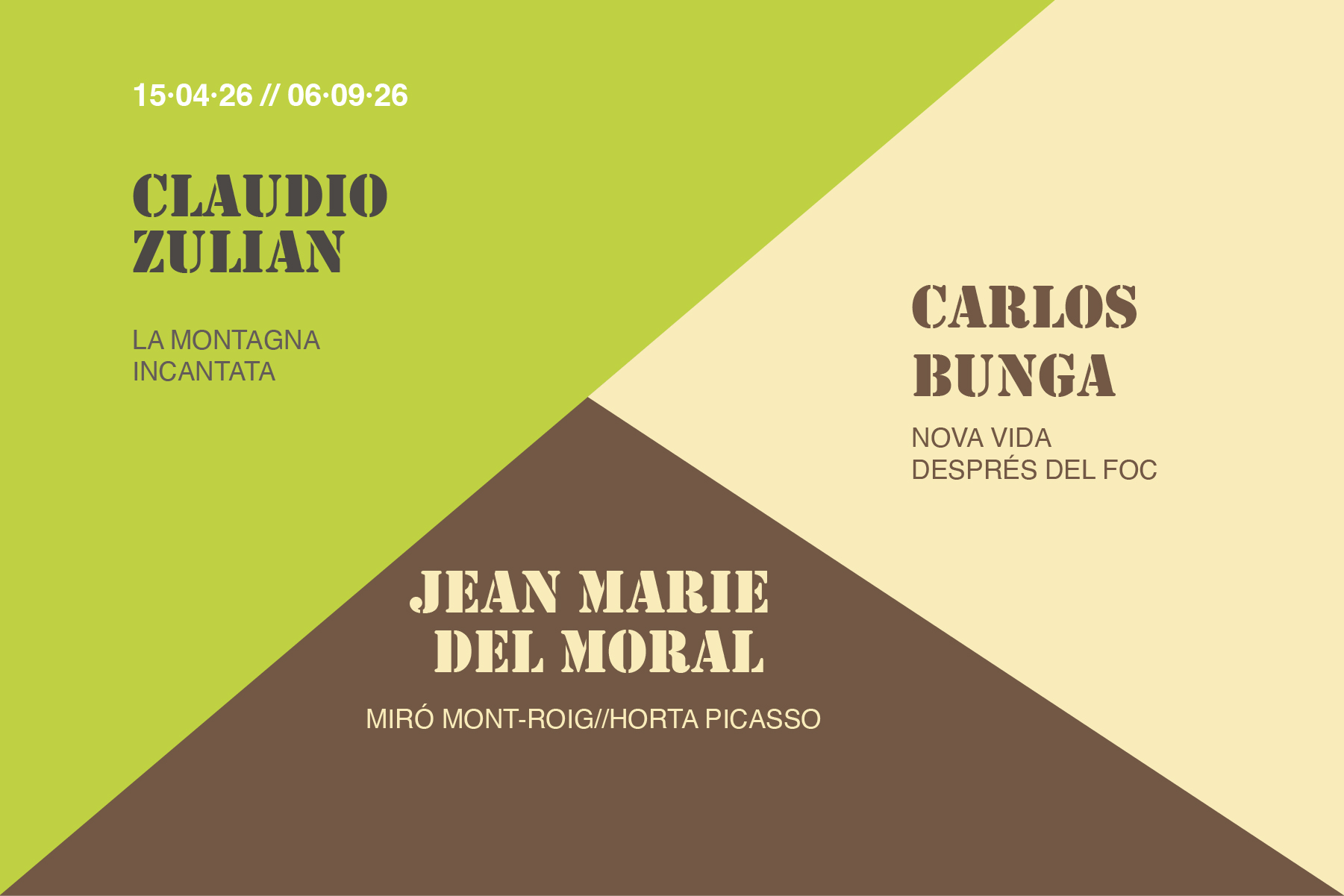
15.04.26 at 7 pm – We inaugurate three new temporary exhibitions
Opening 15.04.2026
The Mayor of Palma and President of the Fundació Pilar i Joan Miró a Mallorca, Mr. Jaime Martínez Llabrés, is pleased to invite you to the inauguration of the new temporary exhibitions.
Program:
6:00 p.m. – Guided tour for Friends of the exhibitions by the artists
7:00 p.m. – Welcome and speeches
7:15 p.m. – Free visit to the exhibitions with the artists
7:30 p.m. – Cocktail in the gardens and concert by Trio Miró
9:00 p.m. – Closing of the event.
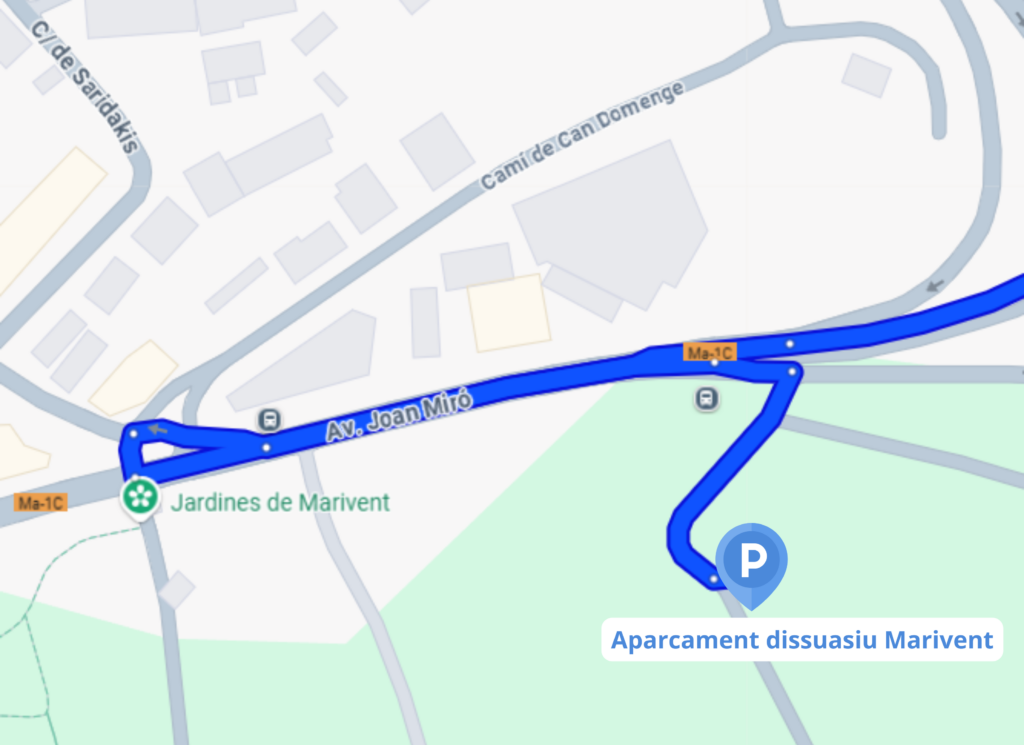
* Relevant information: the Foundation has free parking, but spaces are limited. From 6:30 p.m. to 9:40 p.m. a free transport service will be offered that will connect the Marivent Dissuasive Car Park (Avinguda de Joan Miró, 227B, Ponent, 07015 Palma, Balearic Islands) with the Foundation every 15 minutes.
Col·labora:
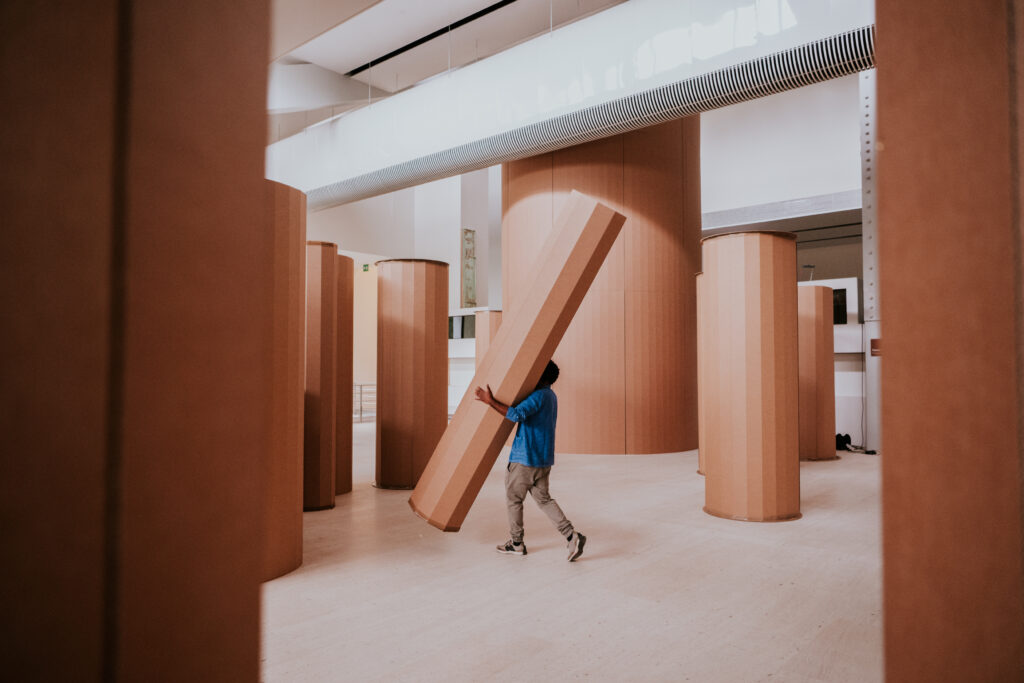
New life after fire – Carlos Bunga
15.04.26 – 06.09.26 / Espai Cúbic
“I painted these paintings in a frenzy, with real violence so that people will know that I’m alive, that I’m breathing, that I still have a few more places to go. I’m heading in new directions.”
Joan Miró on his Toiles brûlées (Burnt Canvasses), 1978
“I love to work with fire… It destroys less than it transforms, it acts on what it burns with an inventive force which possesses magic.”
Joan Miró in an interview with Raoul-Jean Moulin, 1974
Carlos Bunga’s work is concerned with concepts such as process, metamorphosis, (the cycles of) nature, life/death/rebirth (the fragility of everything on Earth), time, temporality, ephemerality, instability, and in-betweenness. Bunga thus refuses the idea that a work of art should exist in a permanent form from its birth to its finality, that art, like living organisms, is finite and submitted to change during its lifetime.
Joan Miró, with his intention to ‘assassinate painting’ –which he proclaimed as early as 1927–, and the revitalisation of this concept with the series of burnt canvasses he executed in 1973, 80 years old, seems like a kindred spirit to Carlos Bunga. Bunga too uses radical means for the creation of his works. Works that often take into account political and social issues present at the time of their making –just like Miró did, especially with his aforementioned series of works. The violence Miró talked about in relation to the burnt canvasses echoes in how Bunga’s drastic alterations of his temporary environments for art institutions are often being perceived as ‘violent’ or ‘destructive’. For Miró, the violence in creating the burnt paintings did not mean the destruction of these works, but above all that these works allowed him to head in new directions. For Bunga, the transitions that he ignites in his works –true to the above-mentioned concepts that he is concerned with, rather than to violence or destruction– allow him to cover new territory too. Through their transitions these works enter a new phase, a new life, with which Bunga emphasises that art should be regarded a living and changeable thing, reassuring us, like Miró before him, that for art –like for nature– there is always new life after fire.
Roland Groenenboom
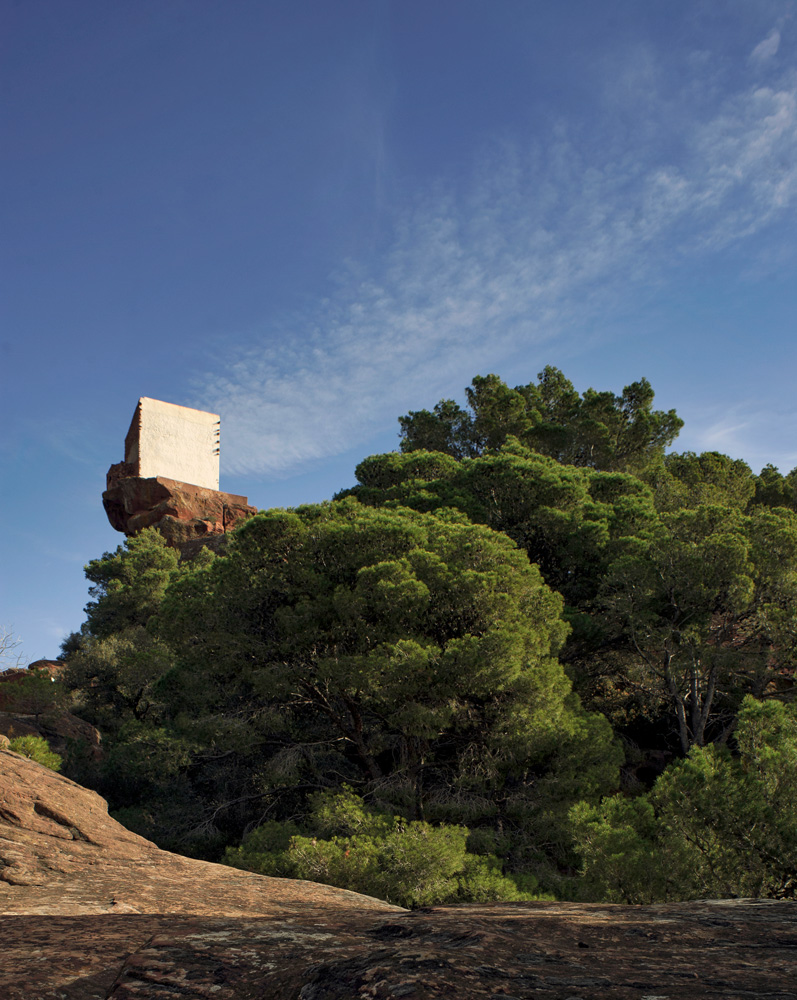
Horta Picasso – Miró Mont-roig – Jean Marie del Moral
02.04.26 – 06.09.26 / Espai Zero
Jean Marie del Moral (Montoire-sur-le-Loir, France, 1952) is a photographer with a long professional career. The son of Republican exiles (his mother was Catalan and his father Andalusian), he started out by making name for himself as a photojournalist with his personal work then, in 1972, he began working for the newspaper L’Humanité, covering several international conflicts.
However, getting to know Joan Miró in 1978 would change the direction of his career as a photographer forever. During a meeting in Barcelona, Jean Marie del Moral asked Miró if he could photograph him in his studio in Mallorca. Miró agreed. Del Moral spent an afternoon with the artist in Son Abrines and was fascinated by Sert’s studio and by Miró’s work and personality. He realised the importance of the studio for the artist and the opportunity that photography offers not only to capture the atmosphere of the place but also to bring to light, as far as possible, the mystery of the creative process, the enigma of art.
Since then, a significant part of his photography has focused on visiting the studios of many of the great artists of our time, such as Miquel Barceló, among many others.
But the case of Picasso and Miró is different. Miró has remained one of Del Moral’s great ethical and aesthetic references and, since Miró’s death, the photographer has returned several times to the studios in Mallorca and Mont-roig, seeking to understand the mystery and visual and poetic power of his art.
Although Picasso and Miró painted in very different ways, Jean Marie del Moral believes their art has common roots, and it is in the similarity between Horta and Mont-roig that the telluric force of nature comes into the work of these two great artists.
Del Moral made several trips to Mont-roig and Horta in the autumn of 2022. Although he knew both places well, as if on a ritual journey of initiation he revisited and photographed them once again as true spaces of memory: Mas Miró, the old church and the hermitage of Mare de Déu de la Roca in Mont-roig, and Horta de Sant Joan, where Picasso discovered Cubism in 1909.
With his lucid, poetic gaze, Jean Marie del Moral shows us a different Miró, a different Picasso, always renewed, close to the essential. “Art can die; what matters is that it should have sown seeds on the earth” said Miró. Del Moral creates images that act like seeds; transcendent images that invite us to contemplate, imagine, reflect and comprehend.
Manel Guerrero Brullet
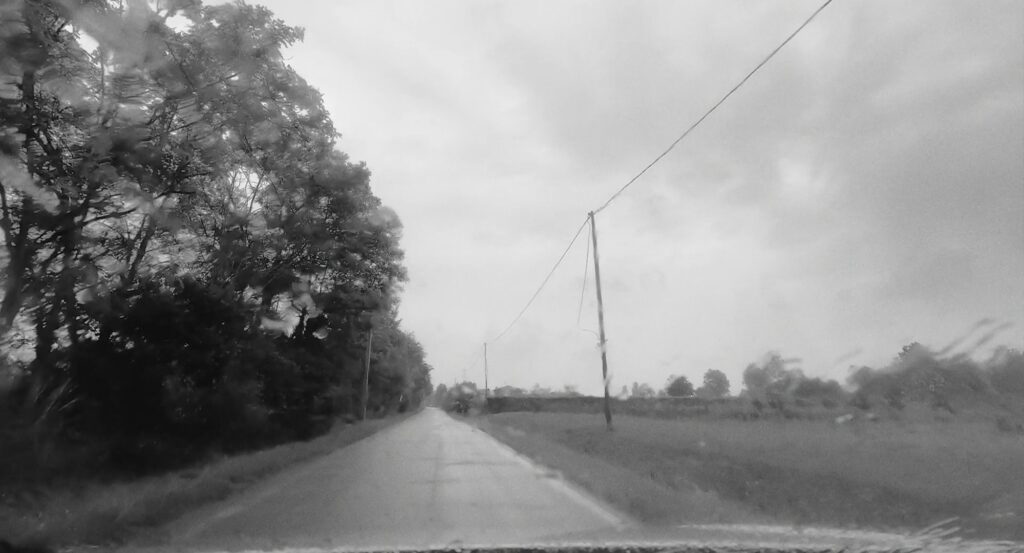
La montagna incantata – Claudio Zulian
15.04.26 – 06.09.26 / Auditorium
Polyphony is not only the simultaneous existence of several voices but also the ability to hear these voices at the same time without reducing them to a single one. It implies a kind of attention that embraces simultaneity, disagreement and layering as conditions of meaning. In Claudio Zulian’s work, this relational logic permeates the image, sound and narrative, as well as the very act of working with others.
Before establishing himself as a filmmaker and visual artist, his musical training taught him that listening, rhythm and the relationship between registers were fundamental skills. From that initial experience remains a conception of creation as a shared space, in which each voice maintains its uniqueness and the whole is articulated not through hierarchy but through connections.
Translated into cinema and artistic practice, this sensibility takes shape in projects conceived as open compositions, configured by times, spaces, presences and testimonies that coexist. The audiovisual works presented in this exhibition—from L’Avenir (2004) and A través del Carmel (2006) to A lo mejor (2007) and La montaña mágica (2023)—create a space where memories, life stories and various ways of inhabiting the world all converge.
Far from functioning as illustrations of a prior discourse, these projects construct narrative from situated experience, touching on the real and concrete whilst maintaining a constant tension between the individual and the collective. The political dimension of Zulian’s work can be seen in his attention to everyday life: small gestures, rhythms of life, ways of working and movements. His films address ongoing processes of transformation and they see memory as a living territory that’s constantly being rewritten.
From a cinematographic point of view, his use of long takes and attention to duration reinforce an ethic of continuity: time is not fragmented and the experience unfolds without artificial interruptions. The camera accompanies processes of change (be they life-related, urban, social or symbolic) and allows the everyday rhythms, community rituals and different ways of relating to space to emerge.
Taken as a whole, Zulian’s work constitutes an experience of shared attention where individual and communal dimensions enter into dialogue and where polyphony becomes a way of thinking about relationships and situating ourselves in the present.
Sofia Moisés Pizà
