
An international team analyzes for the first time, in situ and without damage, the pigments of Miró's works at the Fundació Miró Mallorca
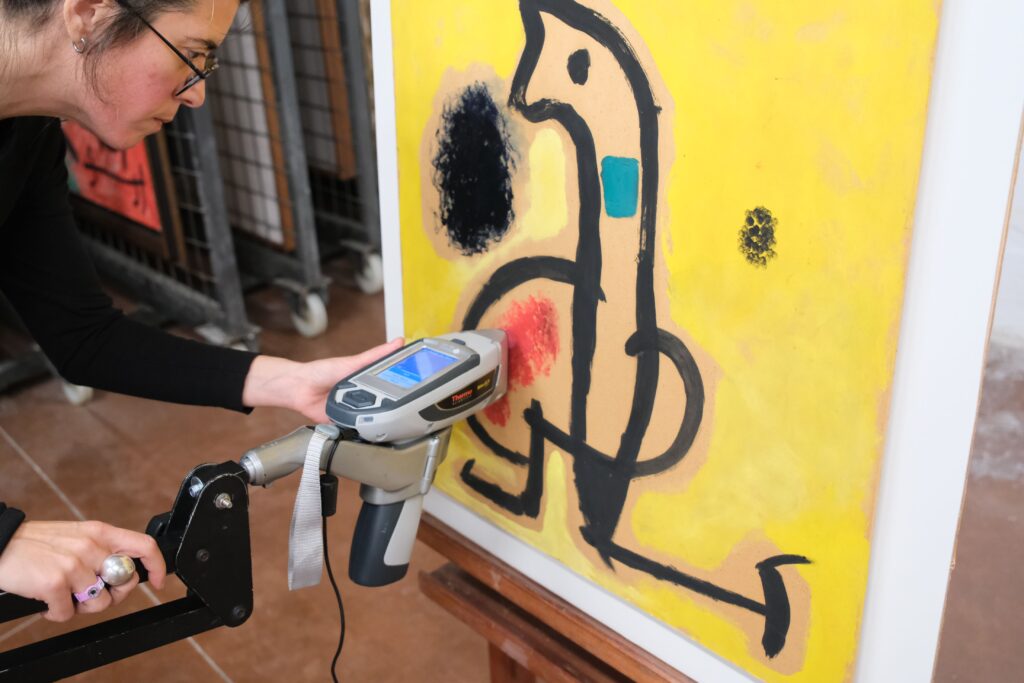
A pioneering scientific collaboration between the Fundació Miró Mallorca, the Courtauld Institute of Art (London), and Nottingham Trent University (United Kingdom) has made it possible to conduct a noninvasive, unprecedented study of the pigments used by Joan Miró during his artistic period in Mallorca.
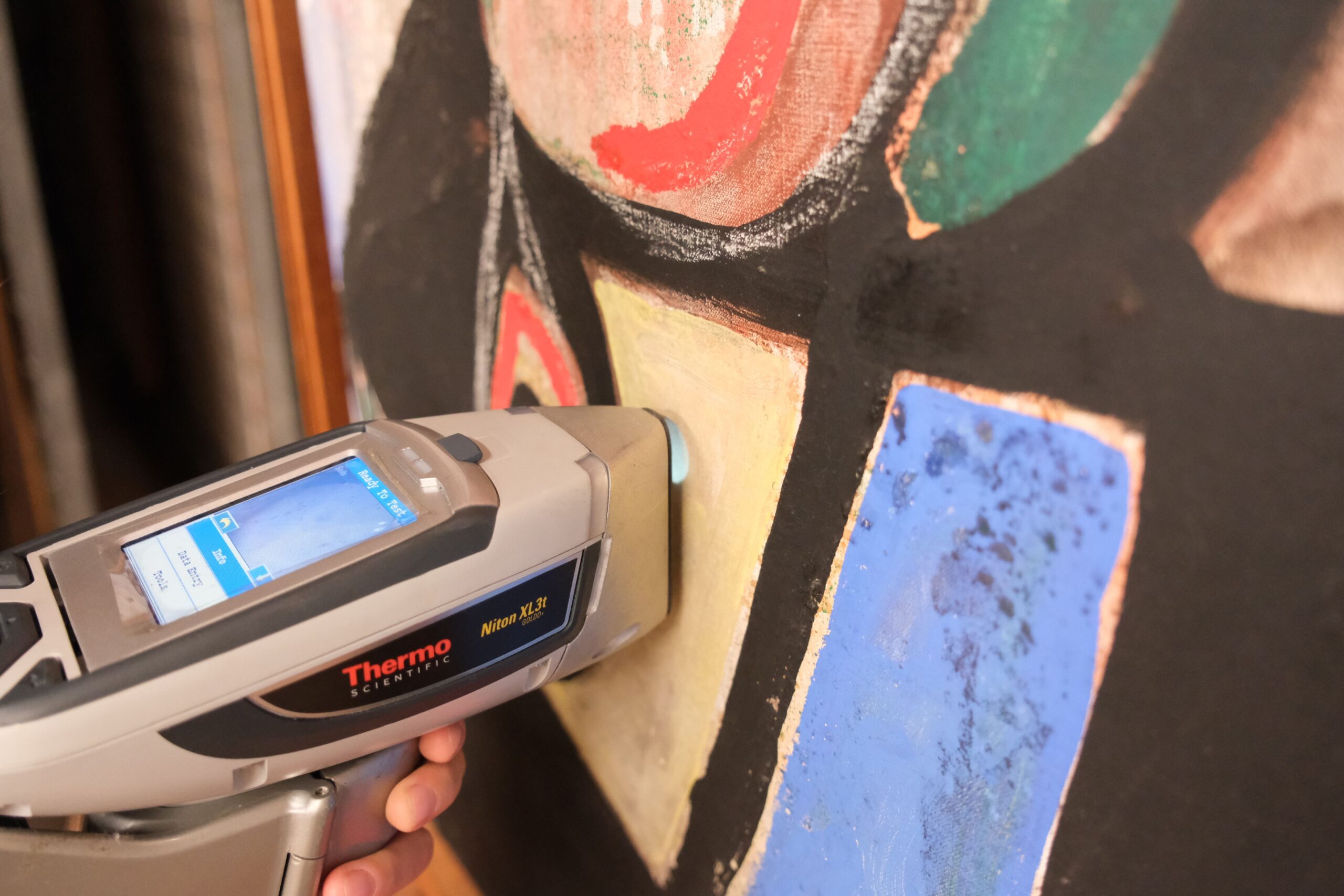
Over two days (October 6 and 7), the research team applied the portable X-ray fluorescence (XRF) technique, a method commonly used in geology but still rarely applied to contemporary art in Mallorca.
“With this method we can find out, for example, whether a white is lead-based or titanium, or whether a yellow contains chromium, cadmium, or sulfur. Each pigment tells us about a moment, a choice, and also the evolution of his artistic practice,” explains Mar Gómez Lobón, a doctoral candidate at the Courtauld Institute of Art and the project’s leader.
A Journey Through Miró's Materials
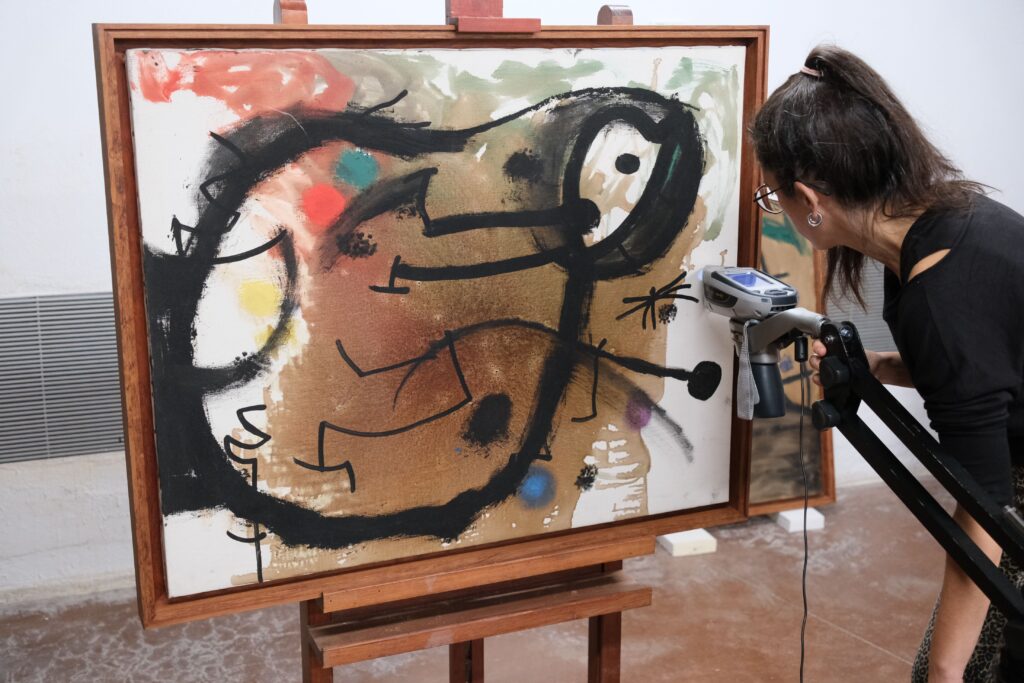
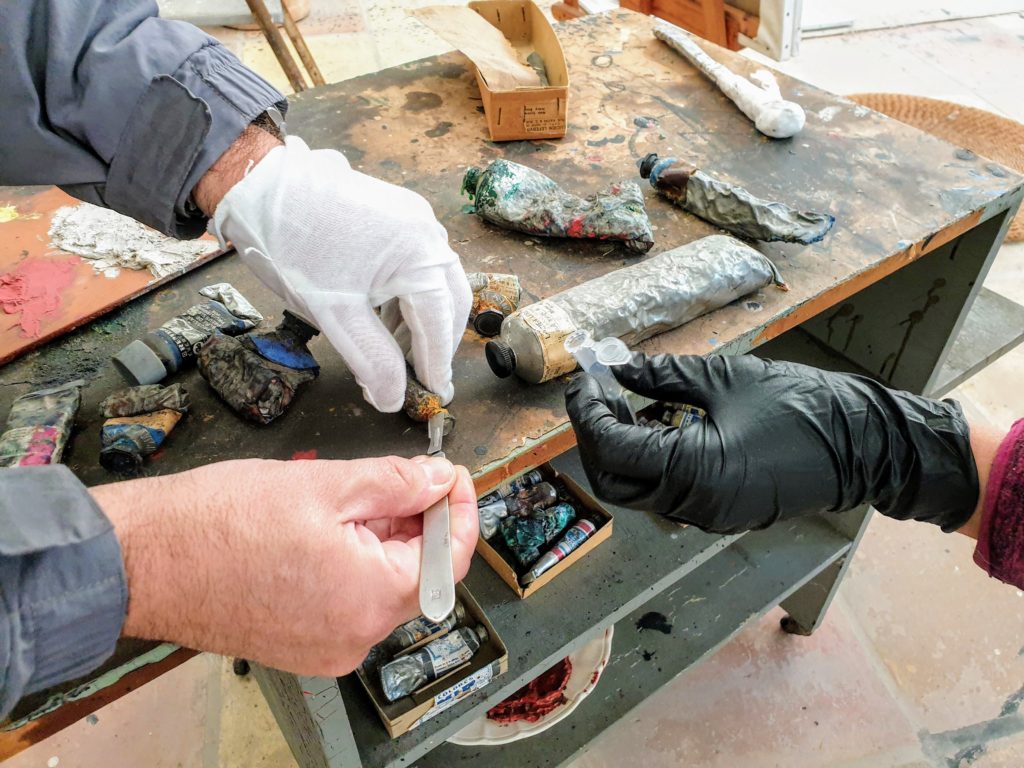
The main objective of the study is to understand which paints, brands, and compositions Miró used and whether there was consistency in his choices over time. It also examines how materials can affect the deterioration of the works and how they relate to the original materials preserved in the Foundation’s workshops.
This project expands the research initiated with the 2020 Pilar Juncosa Fellowship and is supported by Nottingham Trent University’s portable ISAAC Lab, which has brought its technical team to Palma specifically to carry out the analysis.
An example of art and science in Mallorca
Contact
Communication and Marketing
Fundació Miró Mallorca
Carrer de Saridakis, 29
07015 Palma
Tel. +34 971 70 14 20
comunicacio@miromallorca.com
The works analyzed during this phase are part of both the permanent collection (FPJM) and the Foundation’s deposit (DEP). The project has also been recently presented at the Rijksmuseum in Amsterdam and has generated landmark academic publications.
This type of research opens new perspectives on Miró’s figure, connecting his work with science, 20th-century materials, and his island context.