

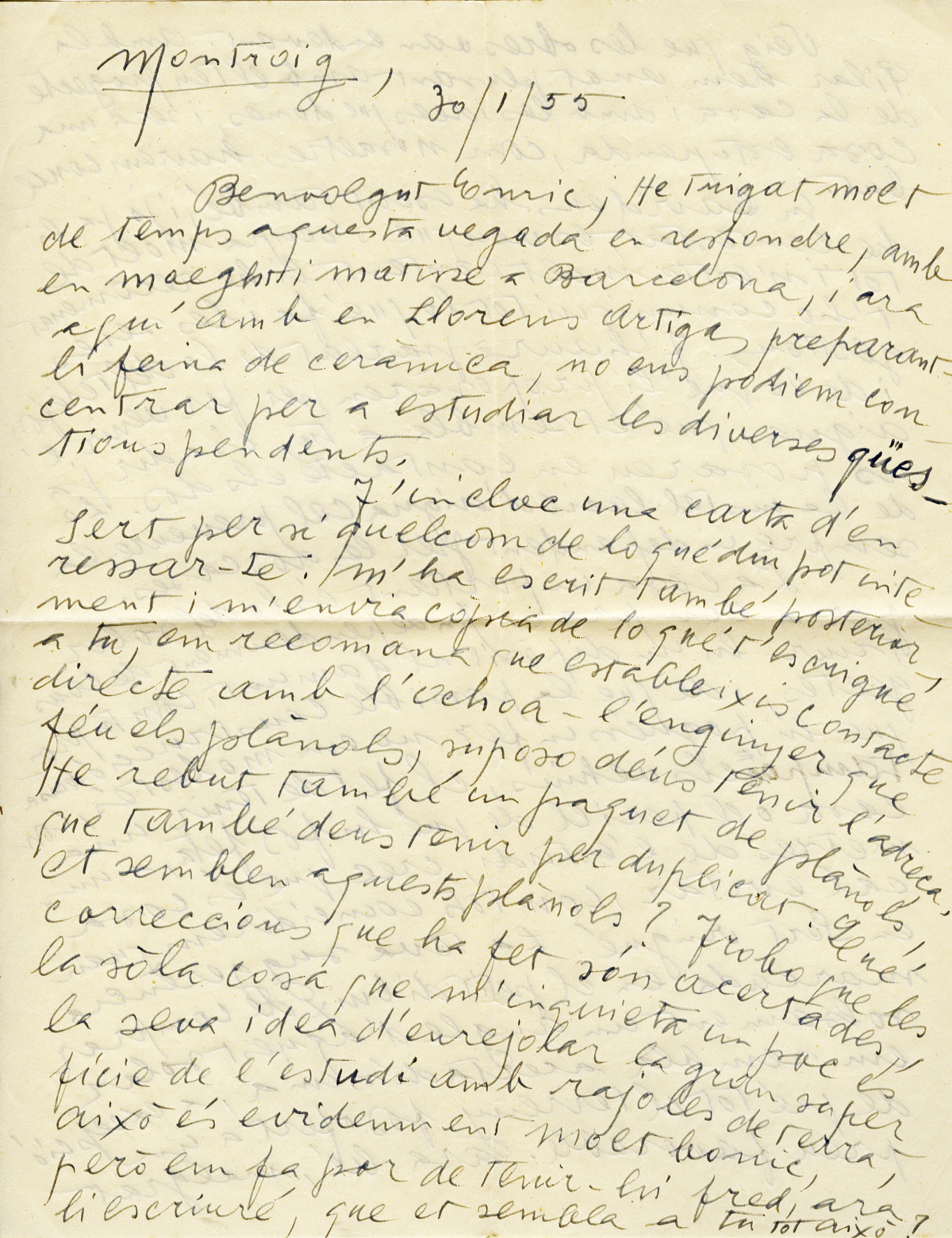
A donation of 19 unpublished letters allows us to reconstruct the creative and constructive process of the Taller Sert between 1954 and 1956 and opens up new lines of research on Miró's creative territory in Mallorca. A selection of these is currently on display in the library of the Fundació Miró Mallorca.
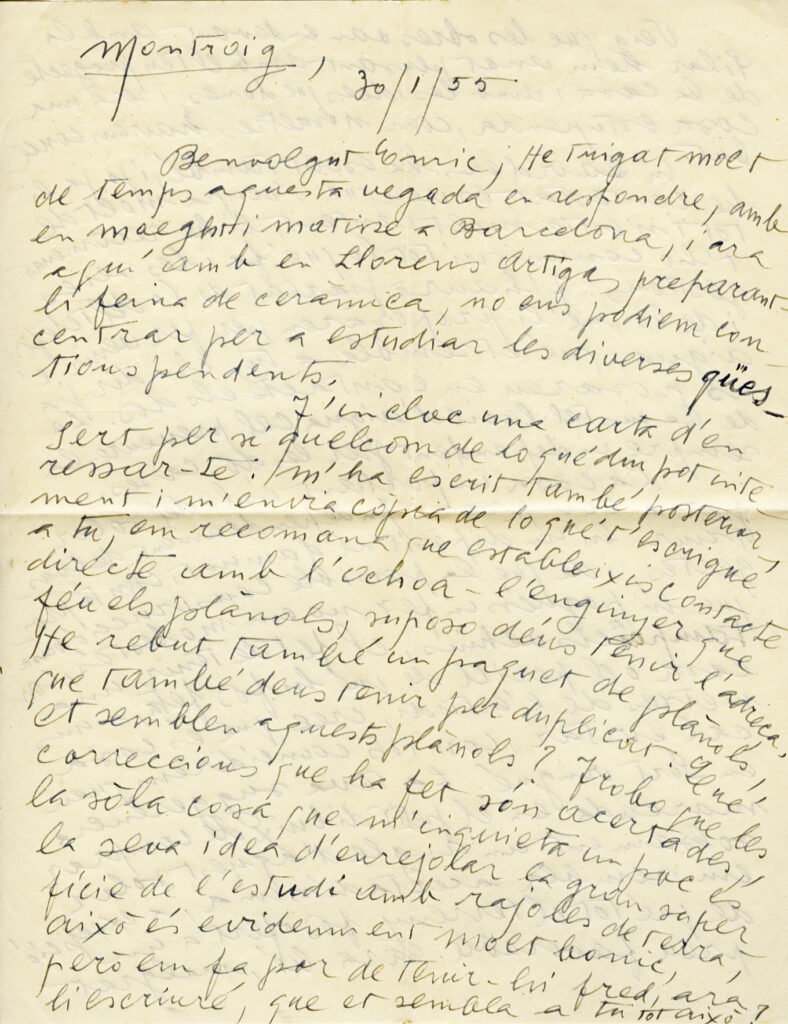
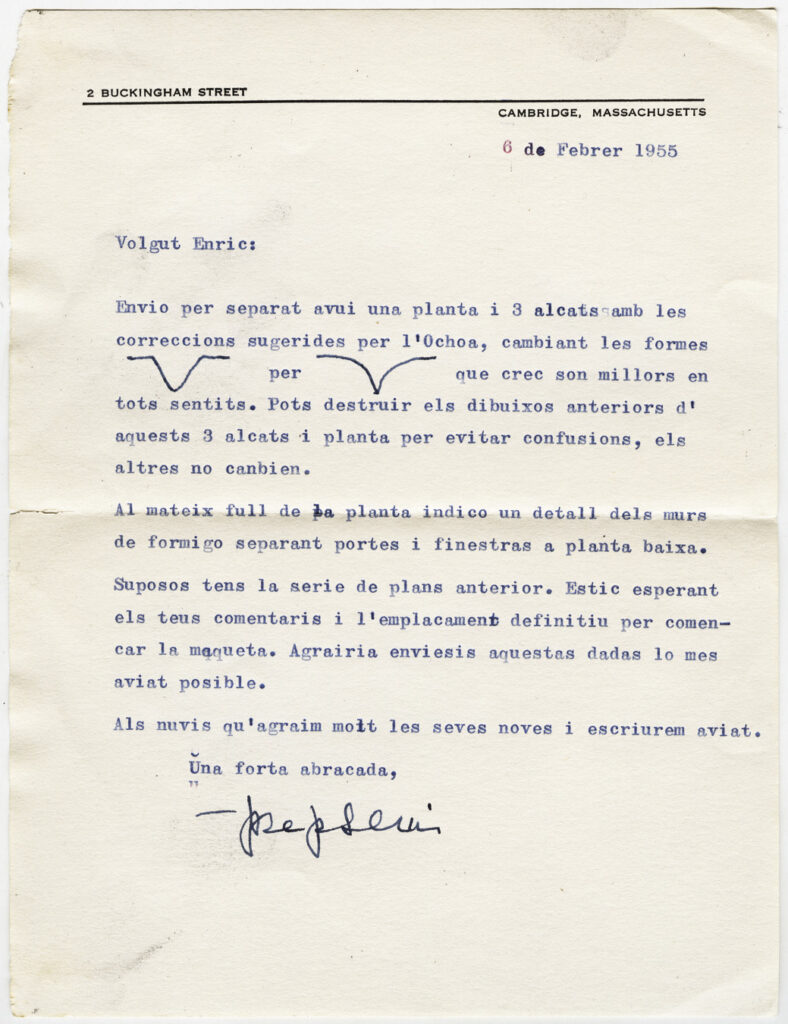
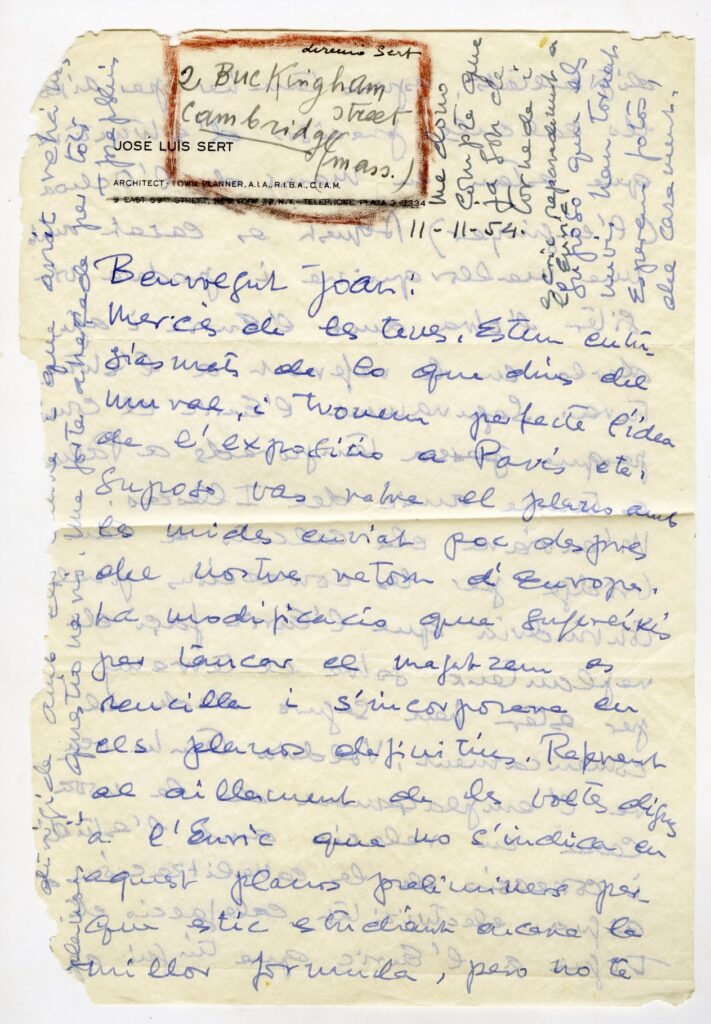
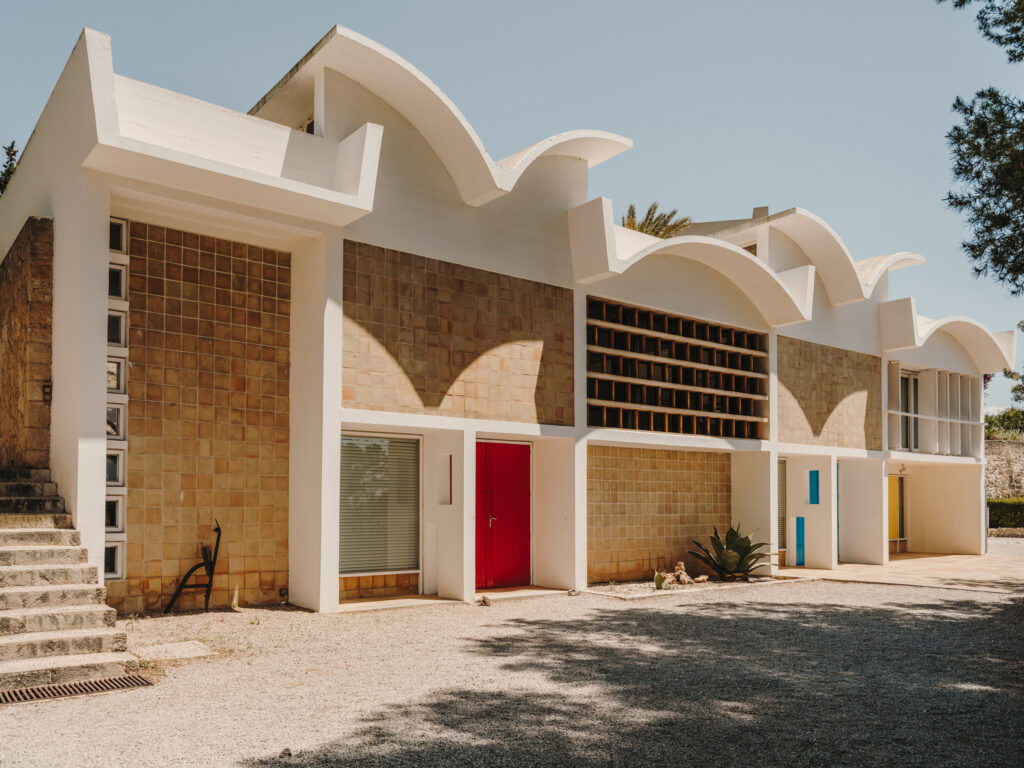
The Fundació Miró Mallorca incorporates into its documentary collection an exceptional donation that allows us to reconstruct, with new depth, the process of designing and building the Taller Sert. Under the title Found words. The lost conversations between Miró and Sert, this set of unpublished correspondence reveals the sustained dialogue between Joan Miró, the architect Josep Lluís Sert, Pilar Juncosa, Enric Juncosa and the engineer Antonio Ochoa de Retana between 1954 and 1956.
The donation consists of 19 letters and various documents from the archive of Enric Juncosa Iglesias, the architect responsible for directing the works of the workshop in Mallorca while Sert resided in the United States. The documentary set has been preserved for decades by the Juncosa family and now becomes part of the Foundation’s collection thanks to the transfer of Maria Lluïsa Juncosa.
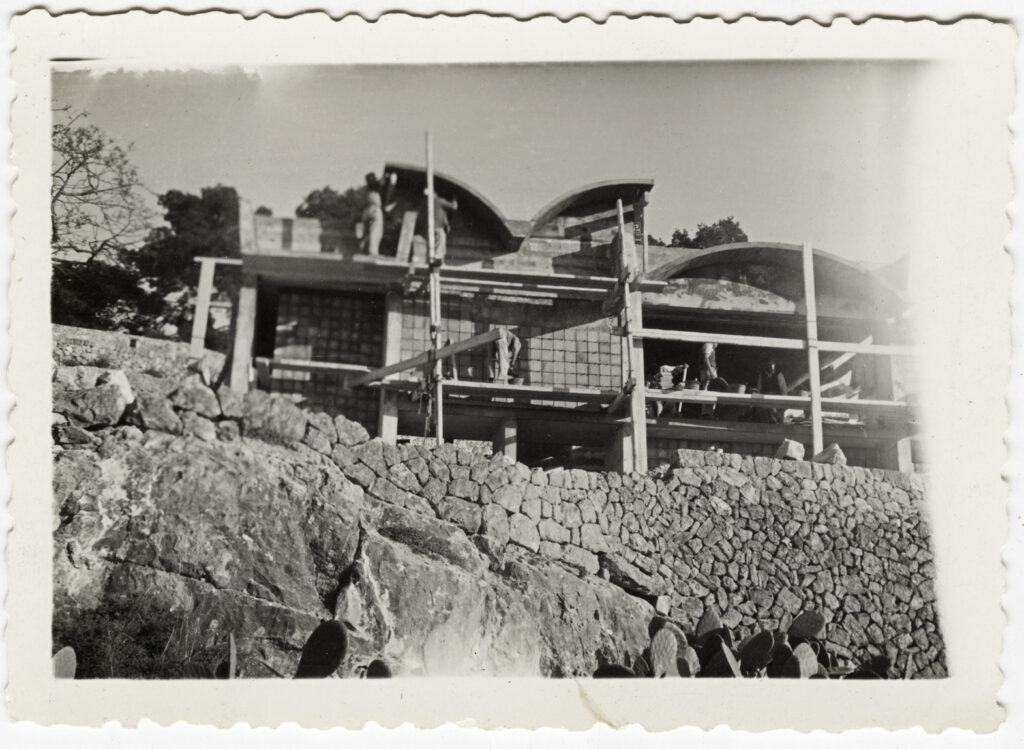
The recovered letters include: 11 from Sert to Enric Juncosa, 3 from Sert to Miró, 2 from Miró to Enric Juncosa, 2 from Pilar Juncosa and 1 from engineer Ochoa, which add to the already known correspondence and practically double the volume of information preserved about the Sert Workshop project. In addition, the set includes a period photograph and the receipt for sending the workshop model to Palma.
Letter from Josep Lluís Sert to Joan Miró (New York, January 9, 1955)“...everything is connected and part of a system.”
Correspondence as a common thread
Beyond its documentary value, the new correspondence transforms the interpretation of the project. The letters not only provide unpublished data, but also allow us to understand the workshop as the result of a living and collaborative process, marked by technical discussions, climatic conditions, material decisions and constant adjustments between Miró’s creative needs and Sert’s architectural response.
The story that emerges from these conversations places movement and the way of inhabiting space at the very center of the project. The workshop is no longer explained solely from the point of view of architecture but is also understood as a journey: from the house to the studio, from natural light to the patio, from the everyday gesture to the creative process. Sert does not only project a building, but a way of working and accompanying the artist on their path to the work.
The new letters also allow us to complete the chronological sequence of the project and locate the beginning of the conversation between Miró and Sert after the joint visit to the Son Abrines grounds in the summer of 1954. That shared walk through the site now appears reflected in the first drawings and in the letters sent from New York and Cambridge.
The research carried out using this material has initially focused on the transcription and chronological integration of all the letters to reconstruct the complete conversation between the protagonists. This first approach opens up new lines of study on Miró’s creative territory in Mallorca and on the relationship between architecture, movement and the artistic process.
With this addition, the Fundació Miró Mallorca continues to expand and deepen knowledge about one of the essential spaces in Joan Miró’s career. Because, as these recovered words demonstrate, Miró never ends: there are always stories to discover and conversations to reconstruct.