


Moneo building
Space Zero
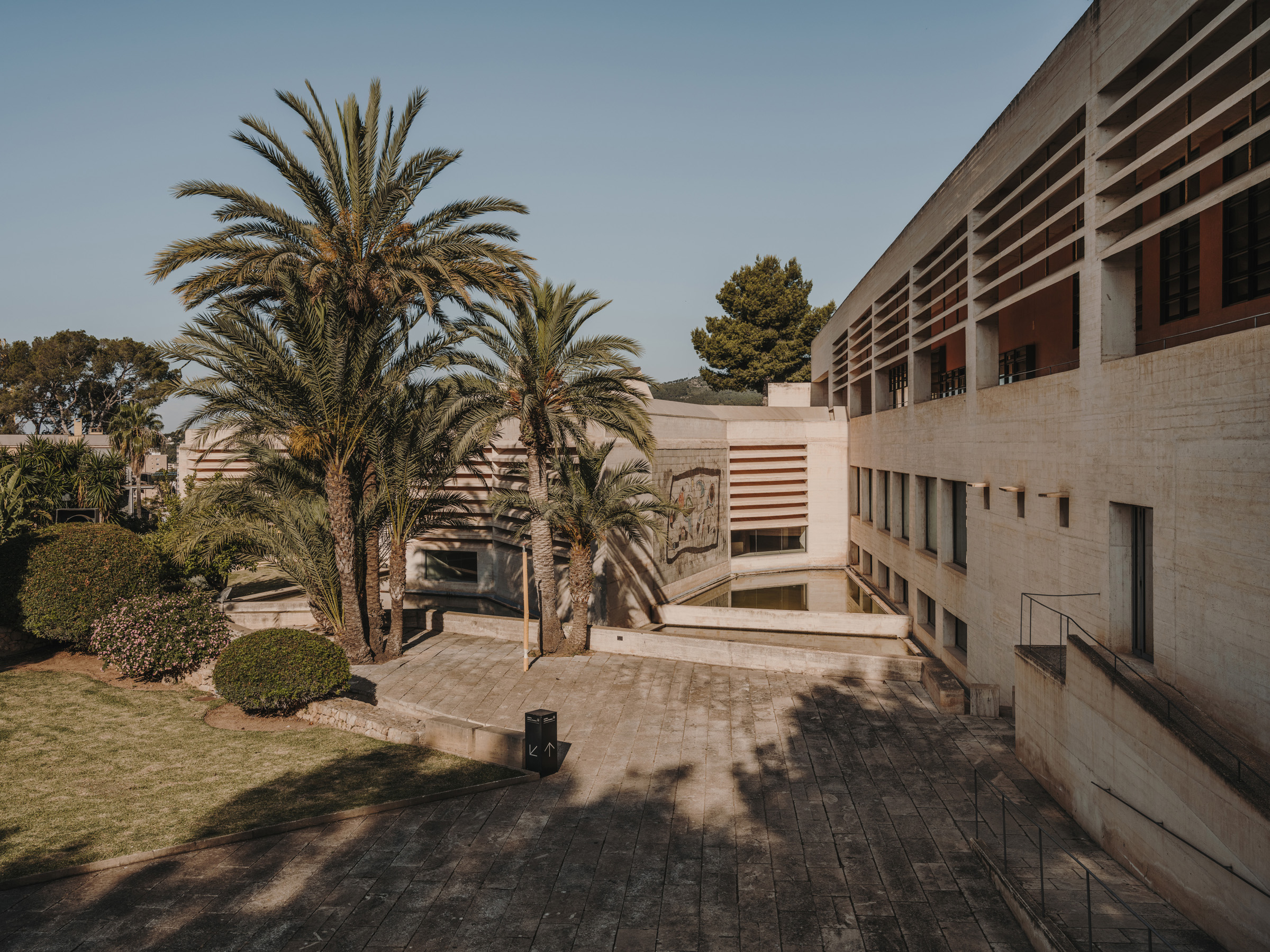
L'edifici Moneo, seu actual de la Miró Mallorca Fundació, es va inaugurar el 1992. Projectat per l'arquitecte Rafael Moneo és el resultat de la donació de Pilar Juncosa, vídua de Miró, a la Ciutat de Palma.
-
Exhibition space
- Space Zero
-
Dates
- 18 September 2026 — 18 April 2027
-
Inauguration
- 18 September 2026
- 19:30
Isabel Servera. “Alenades”
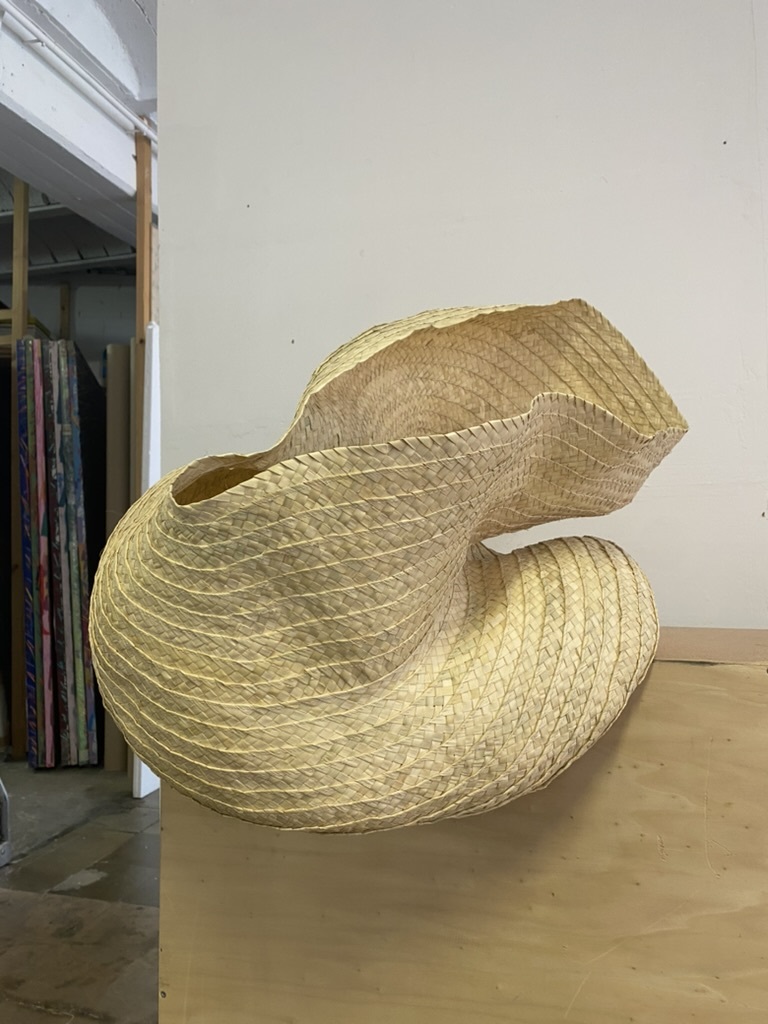
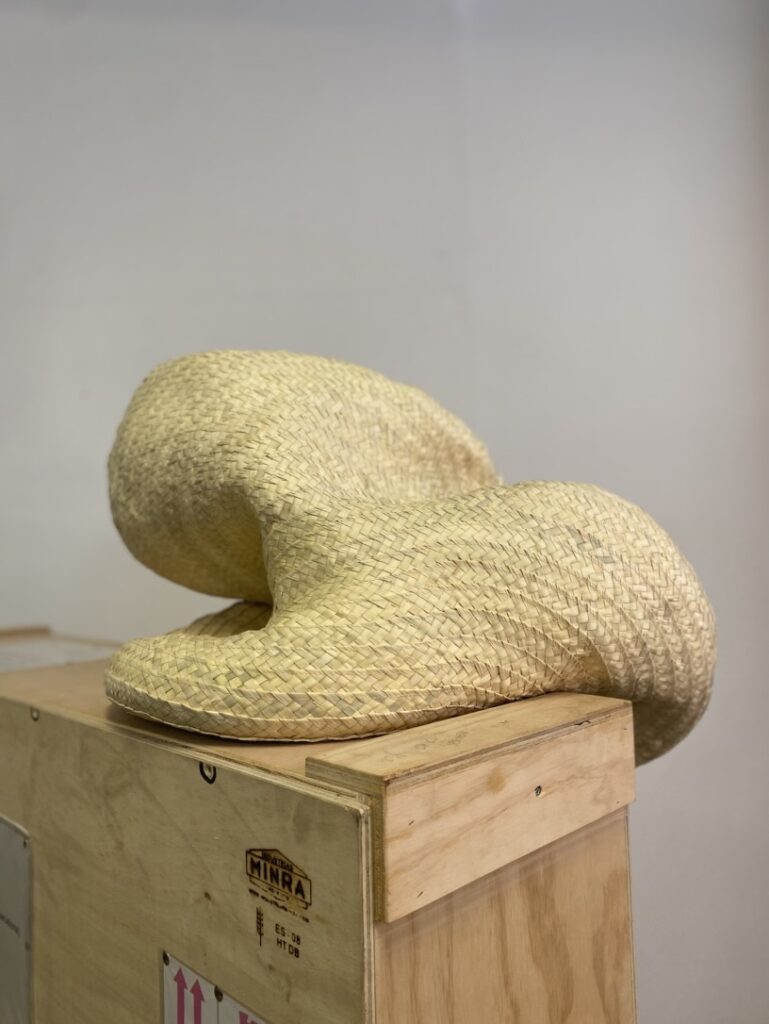
Isabel Servera, a Mallorcan visual artist based in Barcelona, presents Alenades, a project that revives the artisanal techniques of palm-working in the east of Mallorca. Through installation and sculpture, the artist explores the relationship between body, matter and territory, in dialogue with Miró's universe, popular knowledge and the Mediterranean landscape.
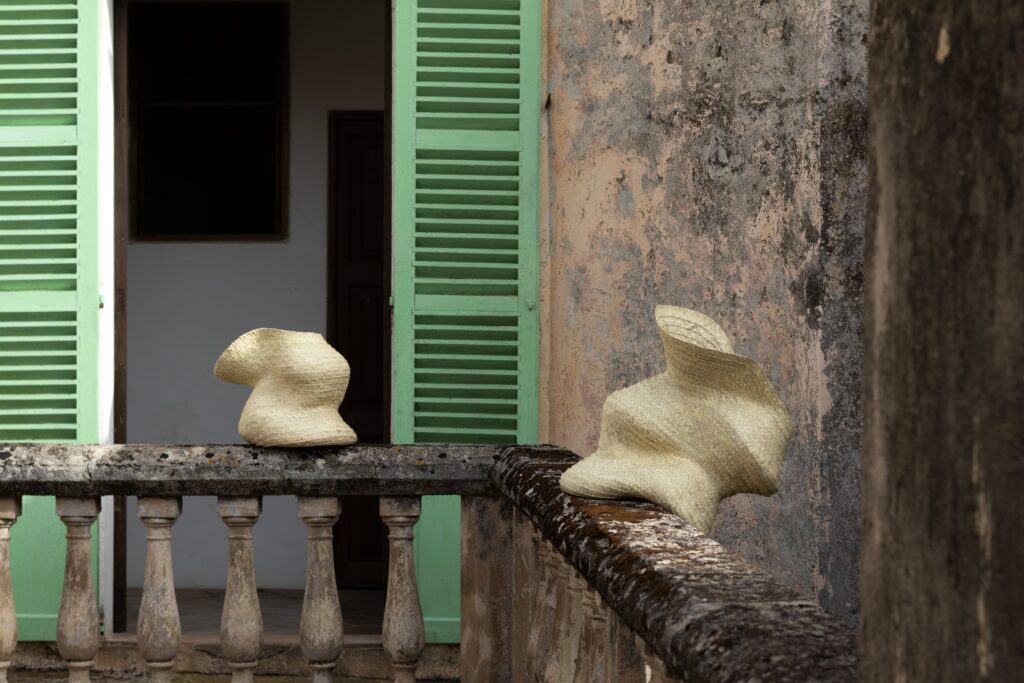
Isabel Servera’s works create their own habitat at the Miró. They colonise the Espai Zero and engage in dialogue both with the omnipresent spirit of Joan Miró and his work and also with the space designed to house his foundation in Mallorca. They expand like unique formations, both rocky and vegetative, in a symbiotic relationship that represents the figurative setting of a cave, a shelter housing two groups of works: the so-called Vetleria and the Alenades.
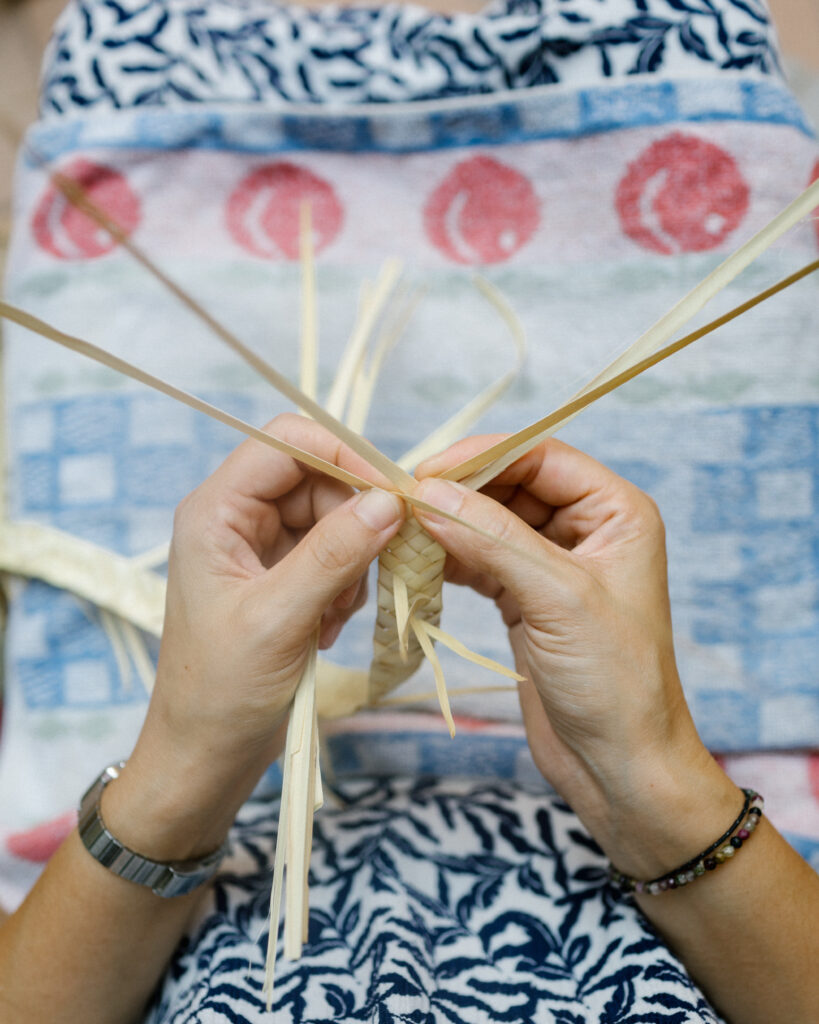
Alenar means ‘to breathe’ in Mallorcan, filling the body with oxygen by inhaling air and expelling it through the same passage, repeatedly, following a constant pattern, a rhythm. The organic sculptures could well be the material embodiment of this act which, through inhaling and exhaling, transforms the external into the internal and vice versa. In fact, these works are titled Alenades (breaths). Silent, they incorporate the rhythm of machine sewing, which is accompanied by the body as the hands guide the llatra, the woven palm leaf, towards the needle. A rhythmic movement which, when physically repeated, transforms the body into a musical instrument, also when it interacts with other elements involved in the work.
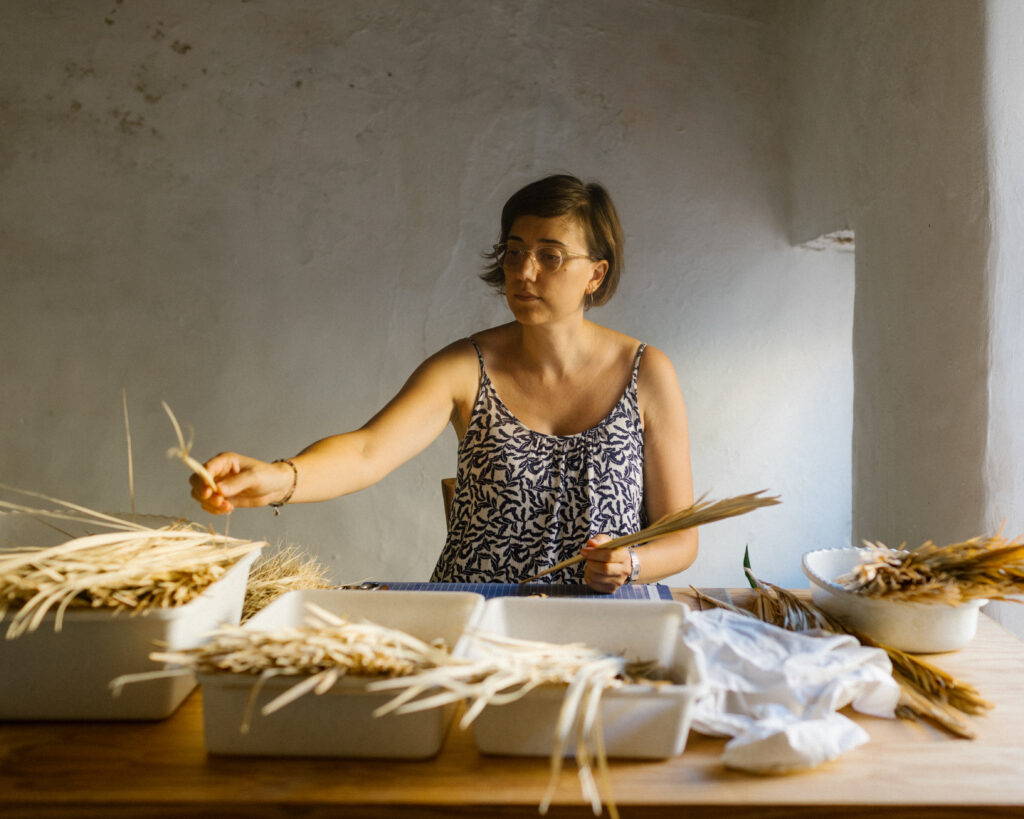
The artist occupies and inhabits her grandmother’s workshop in an exercise of experientially reappropriating craft techniques. She connects with the family tradition of Artà whilst simultaneously producing a rupture by creating a unique language, free from established patterns, which evokes the sound dimension of the work involved in ancestral practices (melodies, gloss poems and songs resonate) by means of silence.
The palm breaths find the perfect symbiosis with the marès stone pieces. A poetry of objet trouvé (in the manner of Miró) leads the artist to repurpose the blocks and slabs of this sandstone found on the site. Some are remnants from the venue’s construction, whilst others are plinths from the Miró sculpture park, now disused. Recycled, they function mimetically, like deconstructed columns. They inexorably refer to the architecture designed for this museum by Rafael Moneo and, by extension, to the island’s traditional construction techniques. The Alenades have colonised the marès stone to form a kind of stalagmite, behaving almost like moss, in search of the sustainability of an ecosystem of their own.
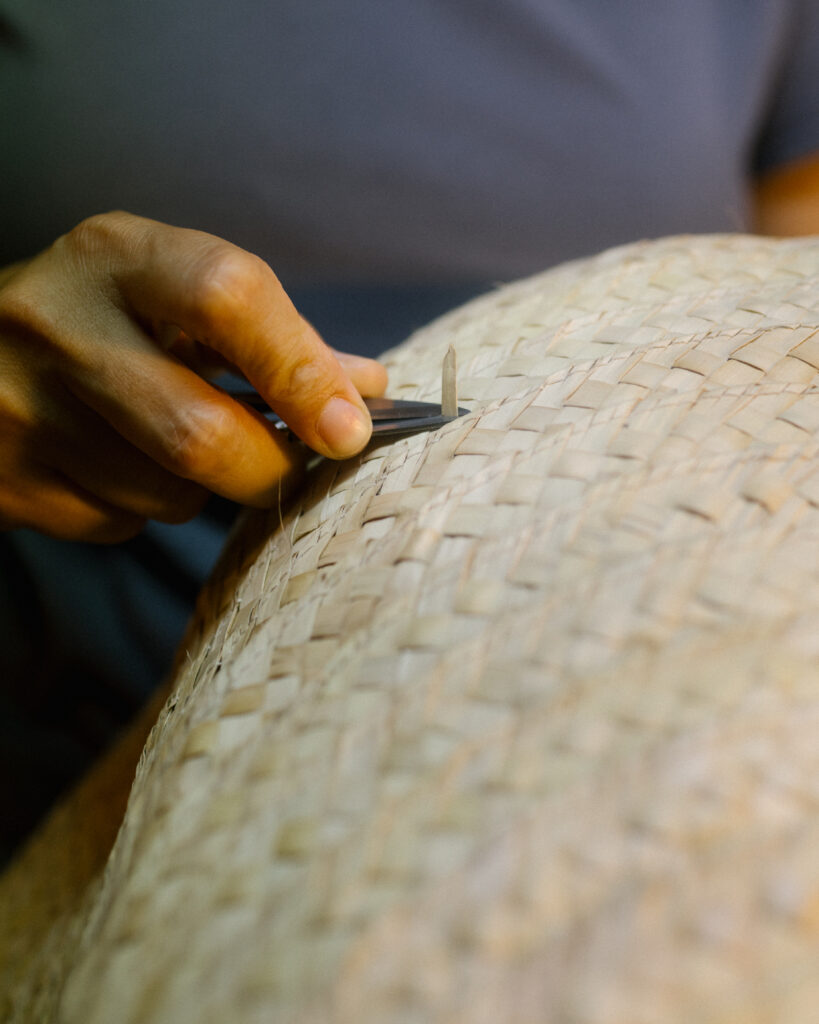
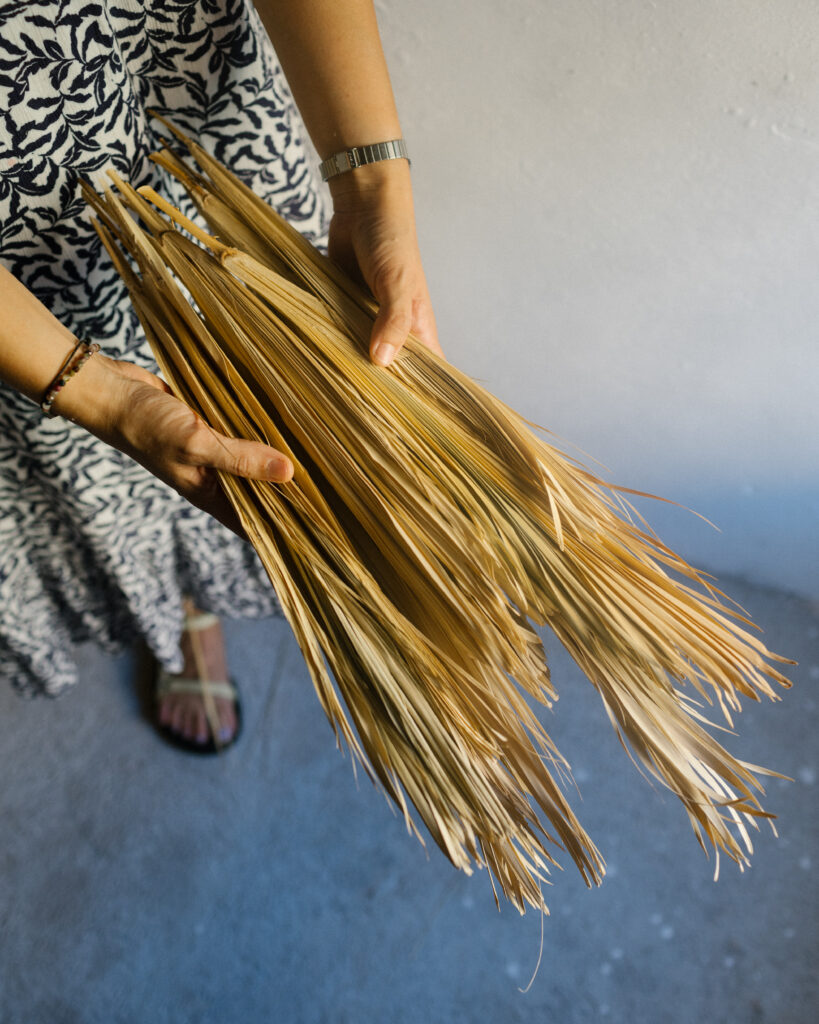
Before stitching using a sewing machine, the llatra is made by preparing the palm leaves and then weaving them together, plaiting them. This work is often carried out in groups, via oral transmission in a vetleria which is a gathering, predominantly of women, that serves as a meeting point for sharing knowledge and stories, as well as songs. The repetition of sounds and gestures becomes a prayer, a mantra, a breath. A rhythm transformed by Isabel into a fluid materiality, contrasting with the apparent roughness of the dried palm leaves.
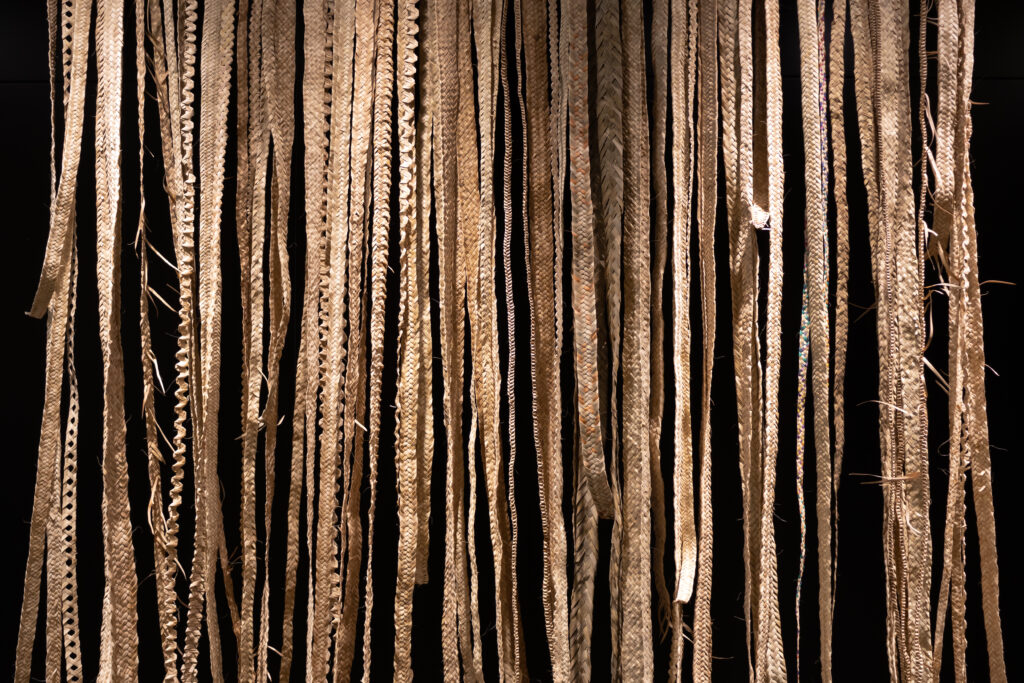
Returning to the cave conceived specifically for the Fundació Miró, the suspended strips of esparto, hand-woven and forming part of the Vetleria piece, could be seen as its stalactites. The work incorporates the collaborative effort of weaving by many hands, which have contributed both the physical labour involved in transforming the material and the care required to shape it. Once again, by way of silence, the piece calls upon the voices of all those women who are present, as well as those who, though absent, are represented through the others.
The materialisation of the silence is brought about through the subtlety of Joana Gomila who, in turn, weaves a musical alliance between tradition and the contemporary in the soundscape that forms part of the exhibition.
Alenar also means ‘to rest’. Fer un alè is to catch one’s breath, to pause in order to be able to continue. And, in the case of Isabel Servera’s artistic practice, in order to become aware of one’s personal and familial position within a community, within the collective evolution that connects us to one another, in an infinite chain of gestures that repeat themselves in a cosmic rhythm.
Pilar Rubí
Biografia
Isabel Servera (Mallorca, 1986) is a Mallorcan visual artist based in Barcelona. Her artistic practice focuses on manual processes of repetition, accumulation and work routines, establishing a dialogue between contemporary art and craft processes.
Through installations, sculptures and textile works, she investigates the relationship between the body, the territory and matter. Her practice connects the intimate with the collective, exploring popular knowledge, intergenerational transmission and the poetic dimension of materials. She is particularly interested in working with techniques linked to traditional craftsmanship and ancestral knowledge, understanding them as spaces of memory, affect and identity. Her work explores the tensions between tradition and contemporaneity, and situates the craft gesture as a space for transmission and transformation.
She has a Bachelor of Fine Arts and a Master’s in Artistic Production and Research from the University of Barcelona, and has furthered her training in tapestry and textile arts at the School for Women of the Provincial Council of Barcelona.
She has exhibited in various national and international museums, art centres and galleries, such as: the IVAM – Valencian Institute of Modern Art (Valencia, 2026), the Palau de la Música Catalana (Barcelona, 2026), the iGallery (Palma de Mallorca, 2026), ARCOmadrid (Madrid, 2024), Drawing Room Lisbon (Portugal, 2023), the Palau de Casavells (Girona, 2023), Studio Weil (Puerto de Andraitx, Mallorca, 2022), Alzueta Gallery (Barcelona, 2020), Can Framis Museum – Vila Casas Foundation (Barcelona, 2019), Hilvaria Studio (Hilvarenbeek, the Netherlands, 2015), the Es Baluard Museum of Contemporary Art in Palma (2014), Muu Galleria (Helsinki, Finland, 2014) and the L.A.C – Lieu de Art Contemporain (Sigean, France, 2013), among others.
In 2023, they received the Barbara H. Weil Award, which enabled them to undertake an artist residency in New York. Her work is held in public and private collections such as the Vila Casas Foundation, the City Council of Palma, the Banco Sabadell Foundation, the DKV Collection, the Art Fund of the Addaya Centre of Contemporary Art, and the Piet Moget – L.A.C Narbonne Collection, among others.
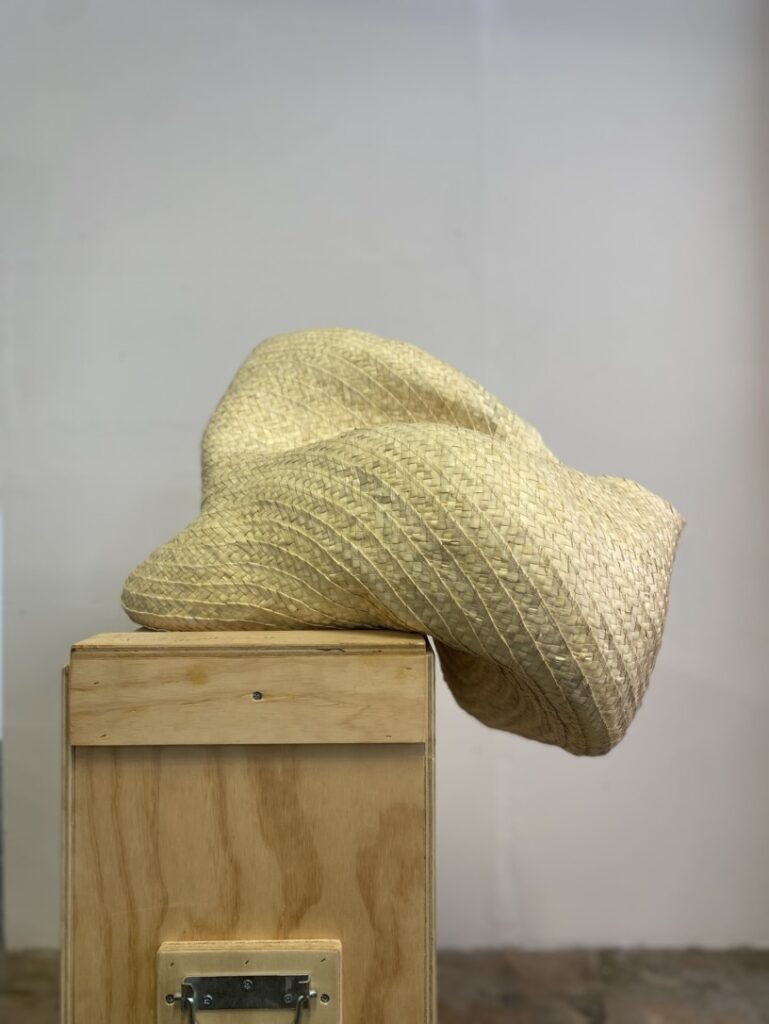
Palma trenada cosida a màquina tradicional
Contact
Art and Research
Fundació Miró Mallorca
Carrer de Saridakis, 29
07015 Palma
Tel. +34 971 70 14 20
exposicions@miromallorca.com
