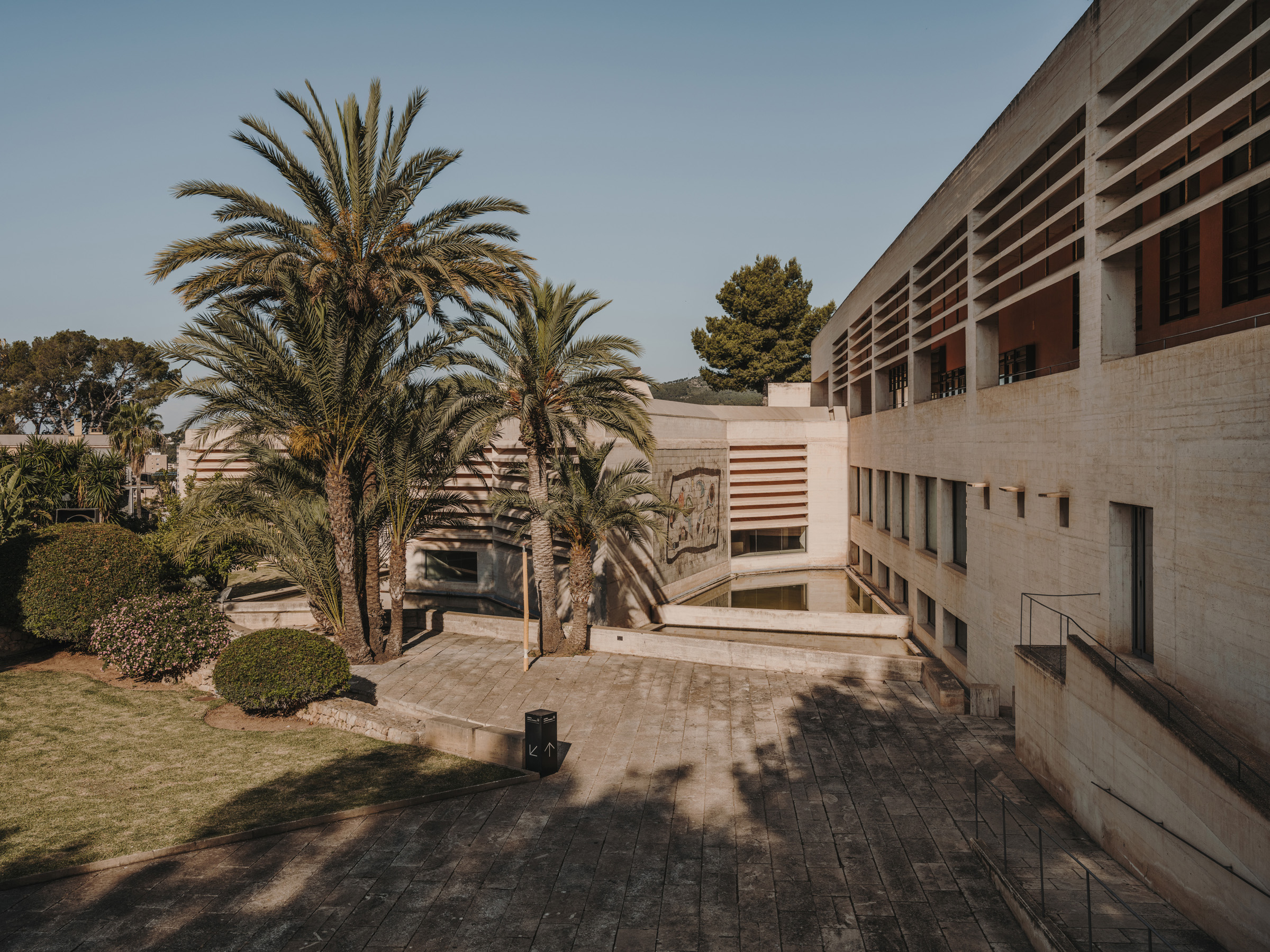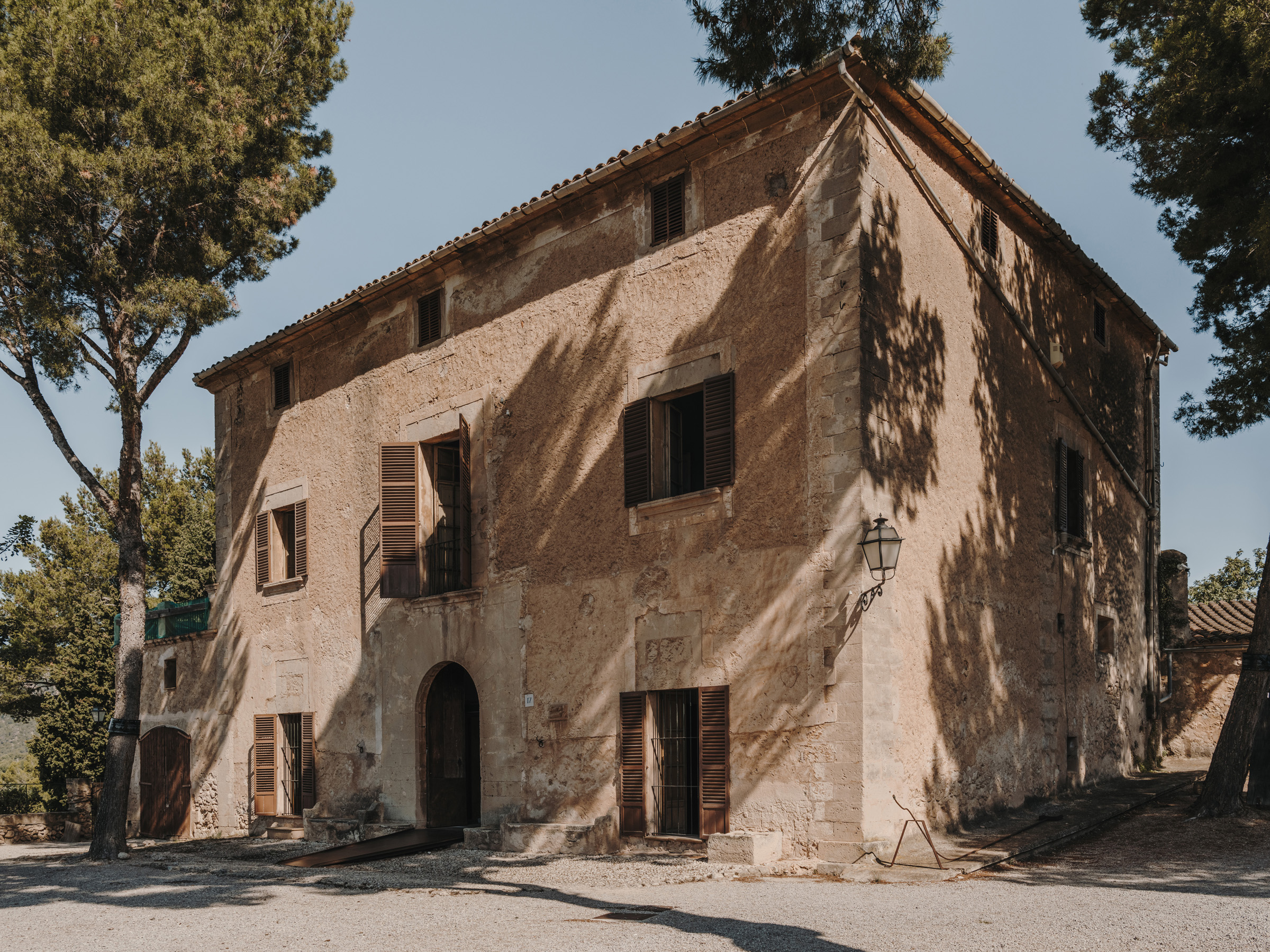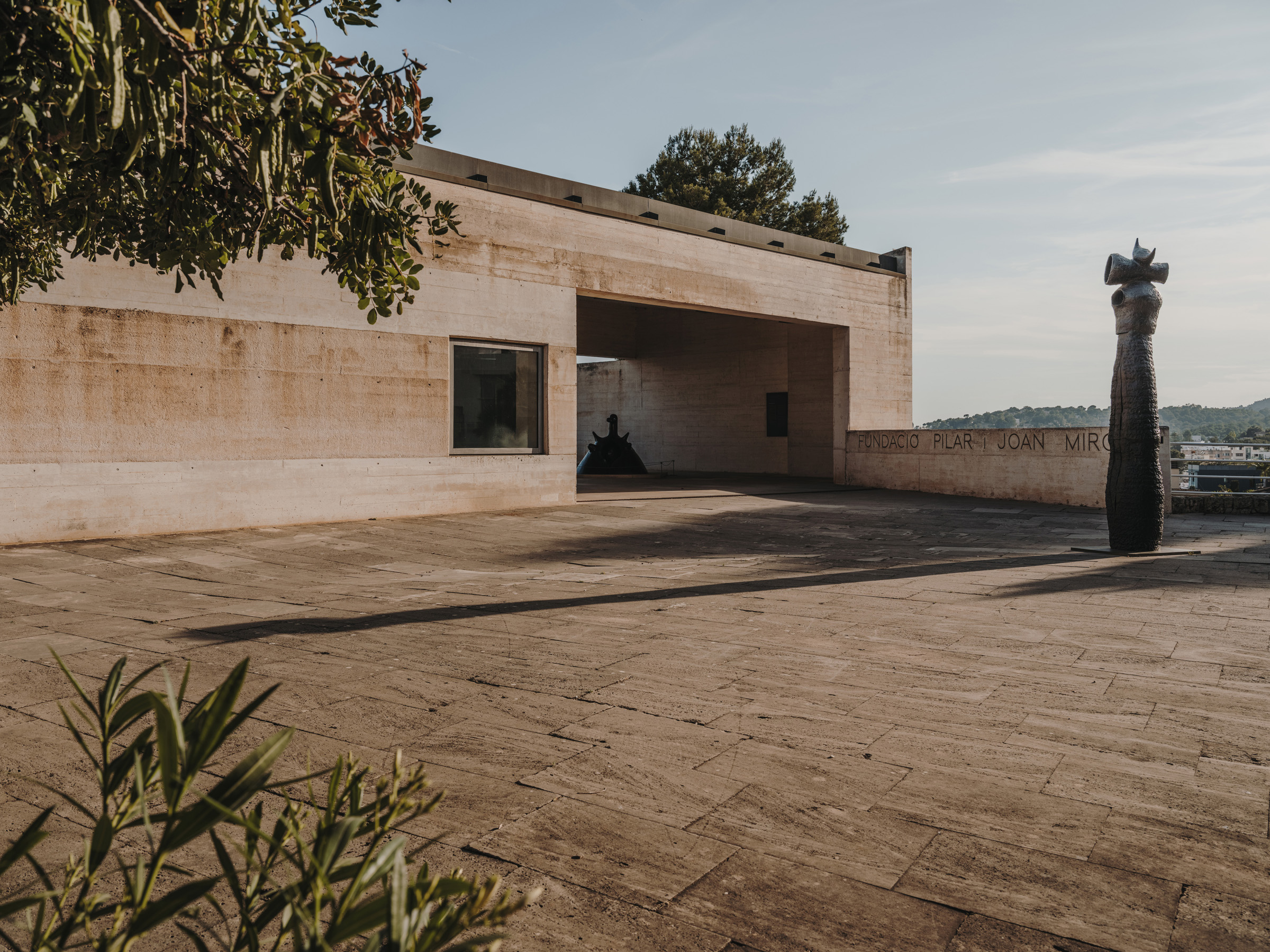
The Fundació’s outdoor gardens trace a path through Joan Miró’s sculptural production via eleven bronze pieces that reflect the artist’s growing interest in mural and monumental works, particularly evident in his final creative period during the 1970s. Shortly after settling on the island, Miró alluded to his desire to transcend the limits of the canvas and even go beyond the walls of the studio and the museum to integrate his work into the natural environment: “In Mallorca I want to make monumental sculptures, to place among the trees and on the coastal rocks.”
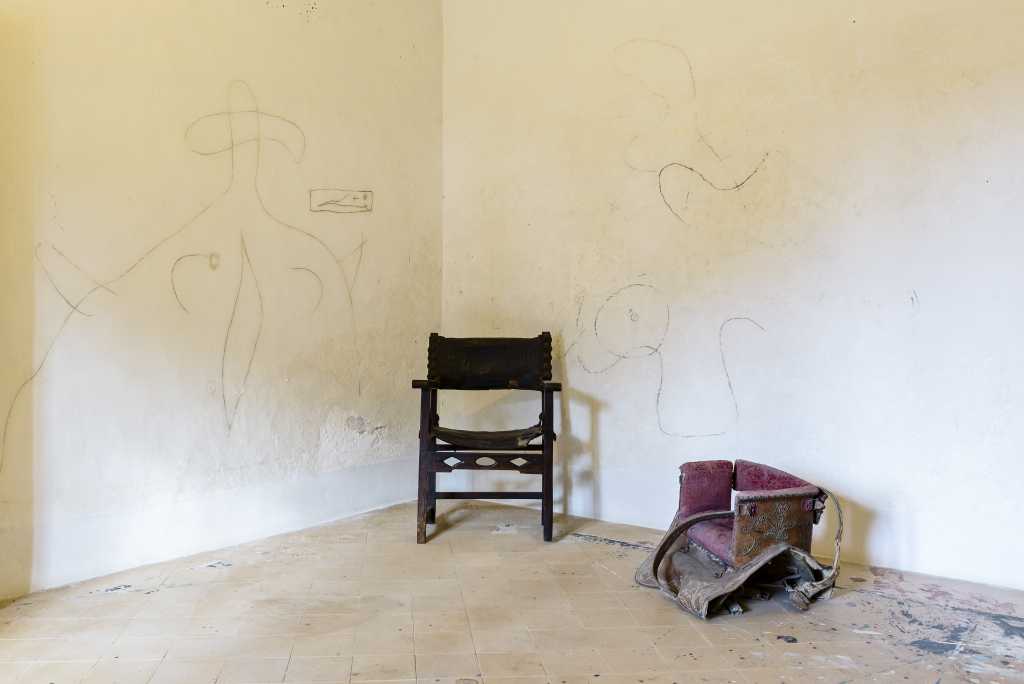
Miró’s workspaces in Mallorca gradually became populated with a diverse array of objects, lying dormant, awaiting the artist’s intervention. His daily walks through the countryside, along the beach, and around Son Abrines allowed him to collect all sorts of unexpected finds and materials. It all began the moment of that first encounter, when Miró recognized the potential of these unusual treasures. Part of this process is captured in the graffiti on the walls of his studio in Son Boter, like many objects still waiting for their moment.
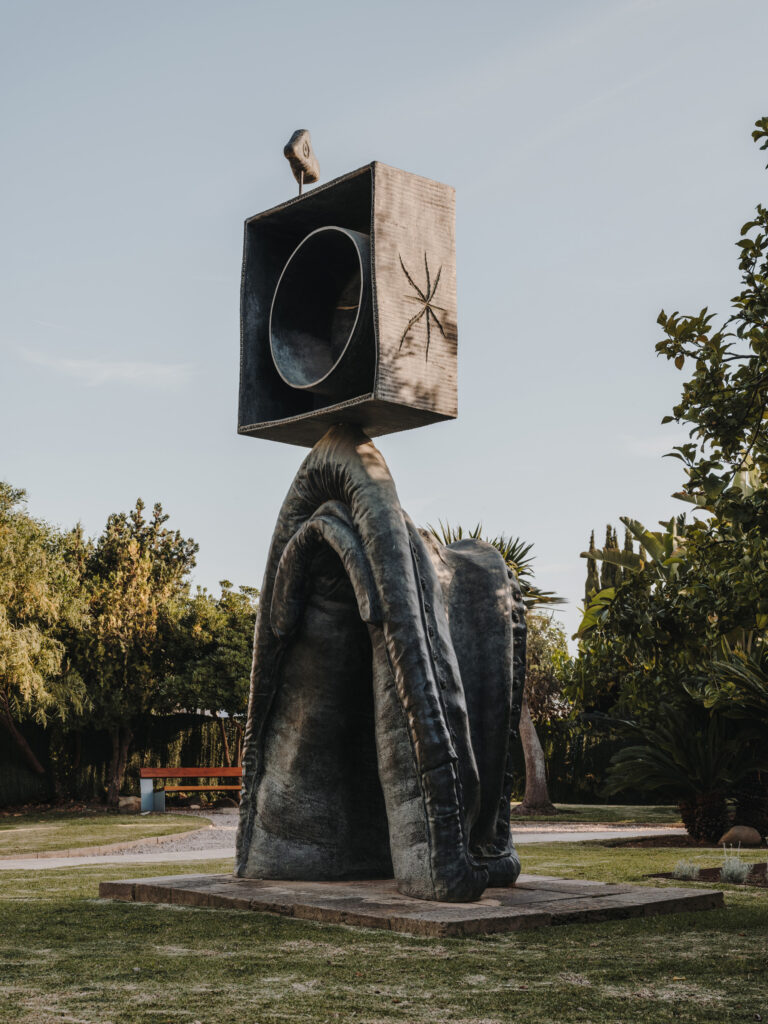
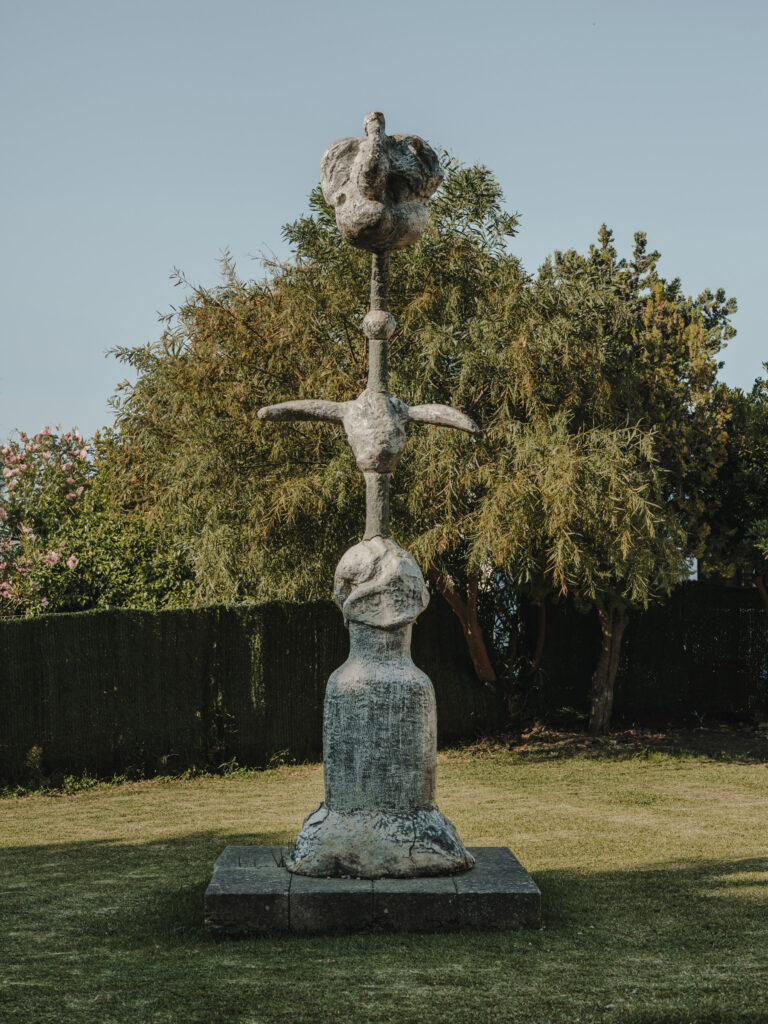
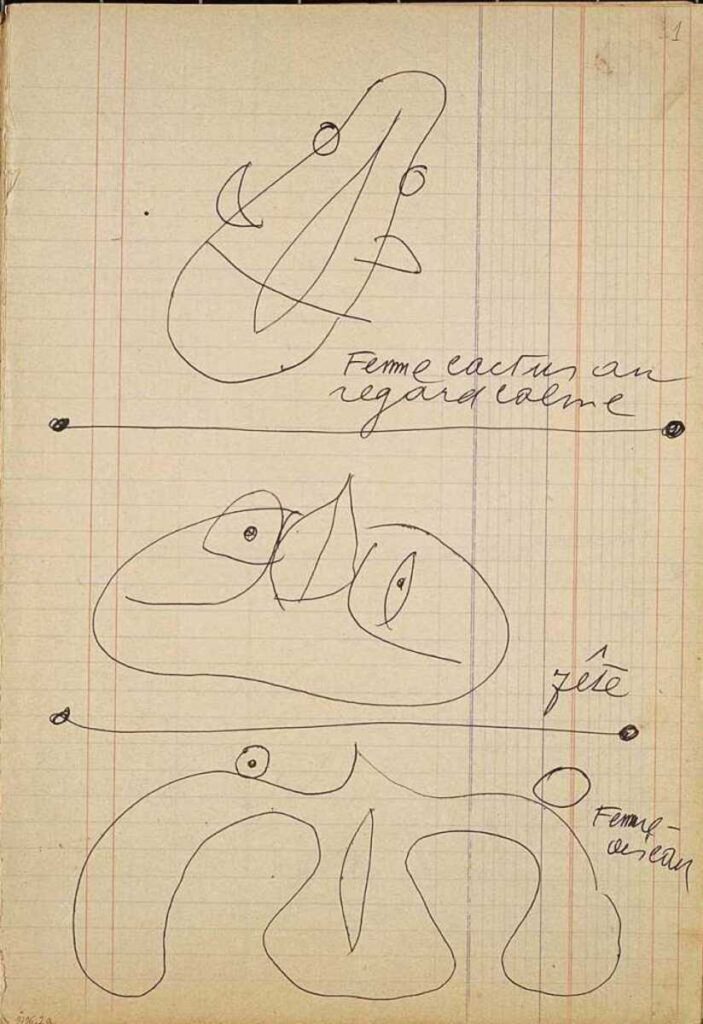
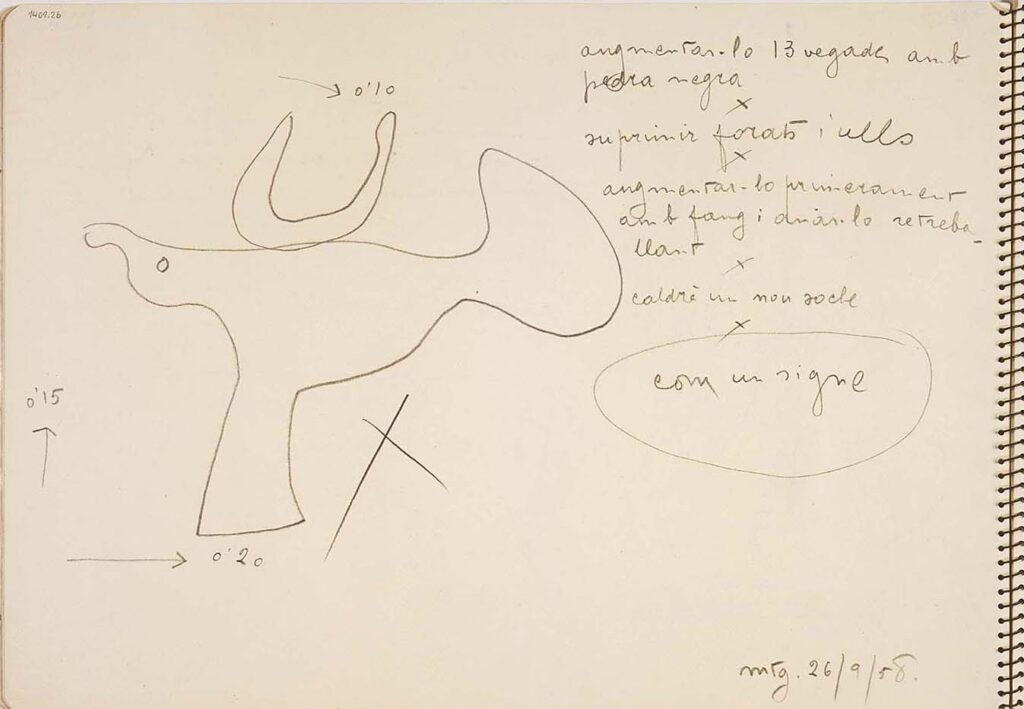
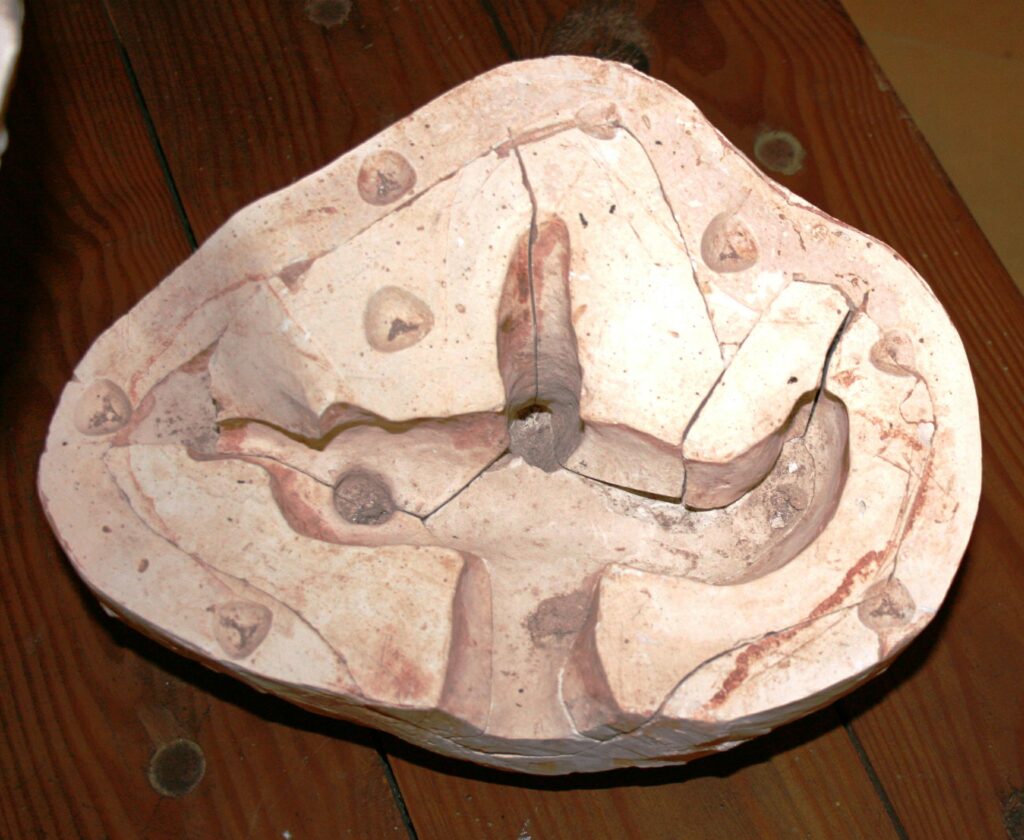
In preparatory drawings, historical photographs, and working models, one can recognize the objects that lie at the origin of Miró’s process, from an Inca biscuit to a pyrometric cone, from the everyday artifact to the working tool. Miró’s sculpture tends toward monumentality and permanence, while the model becomes increasingly fragile and ephemeral. The recognizable becomes enigmatic through unexpected combinations of objects that the casting process transforms into figures.
The object increases dramatically in scale, becoming dignified and immortalized, to reintegrate itself into our daily lives, fulfilling Miró’s desire to give life and soul to public space through his work. Ultimately, the artist returns to nature the gift of his own creation and places it in the heart of the Mediterranean landscape, just as he intended.
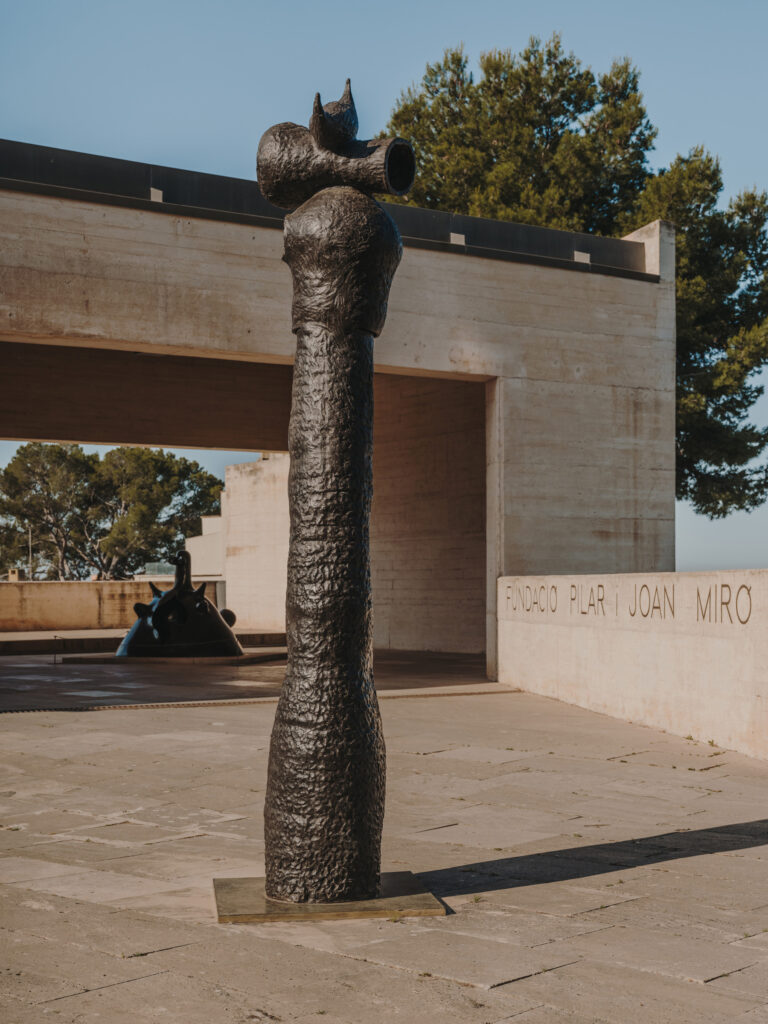
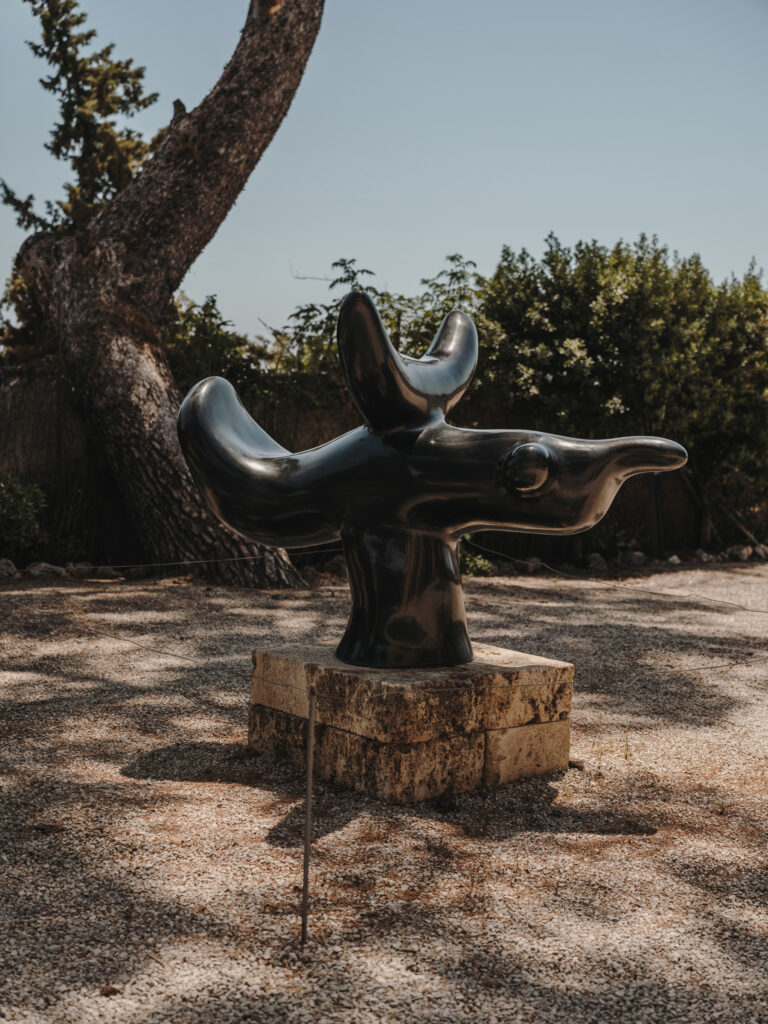
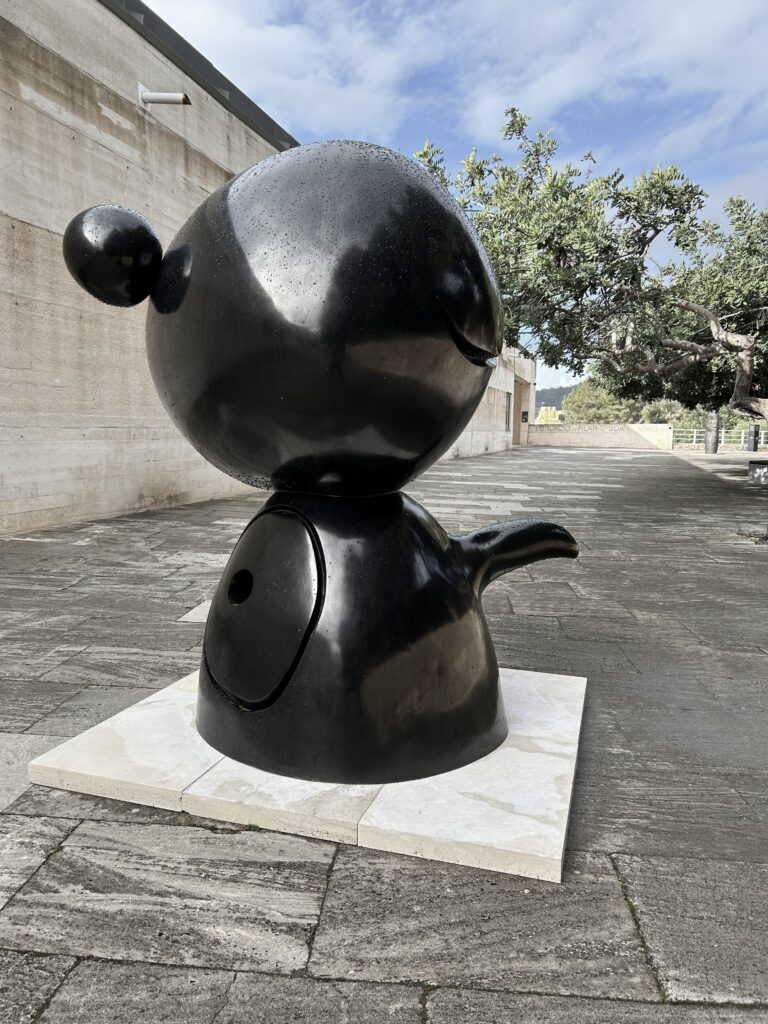
Personnage, 1974
Sand casting
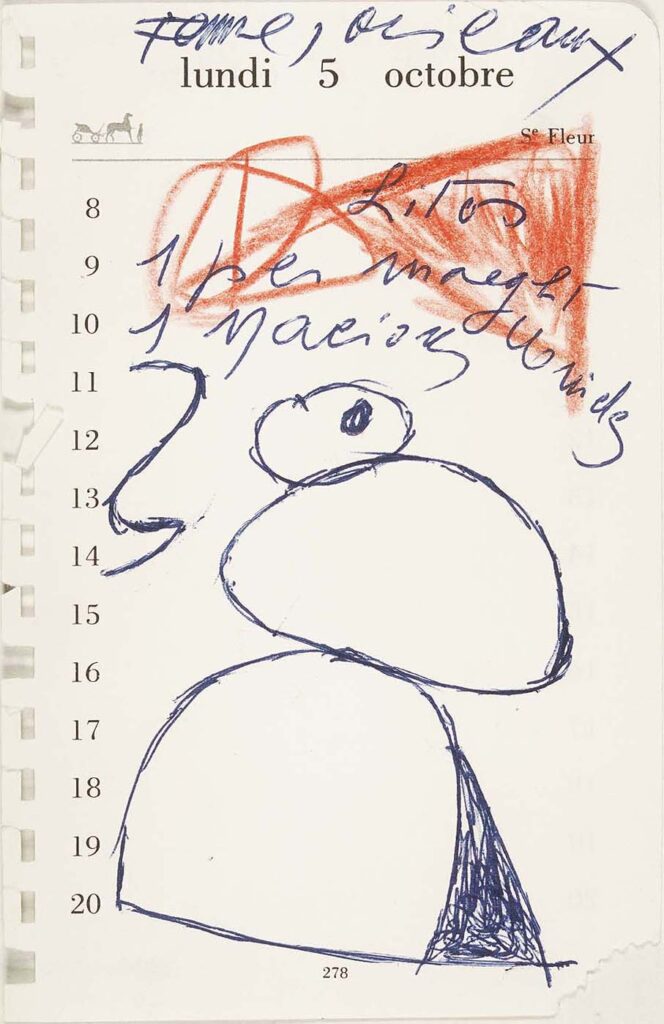
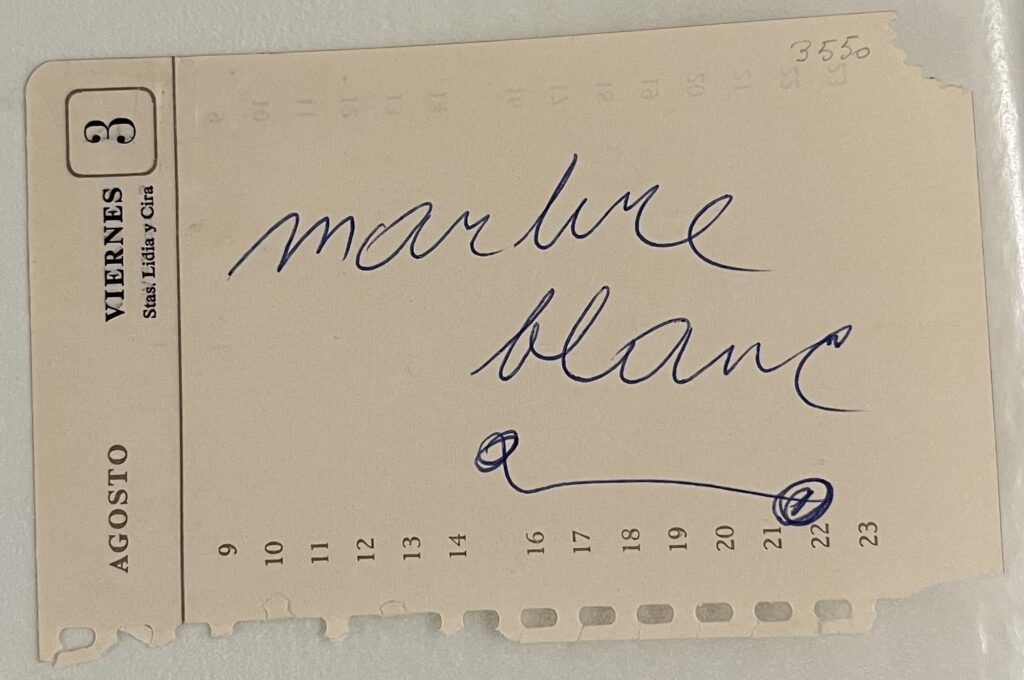
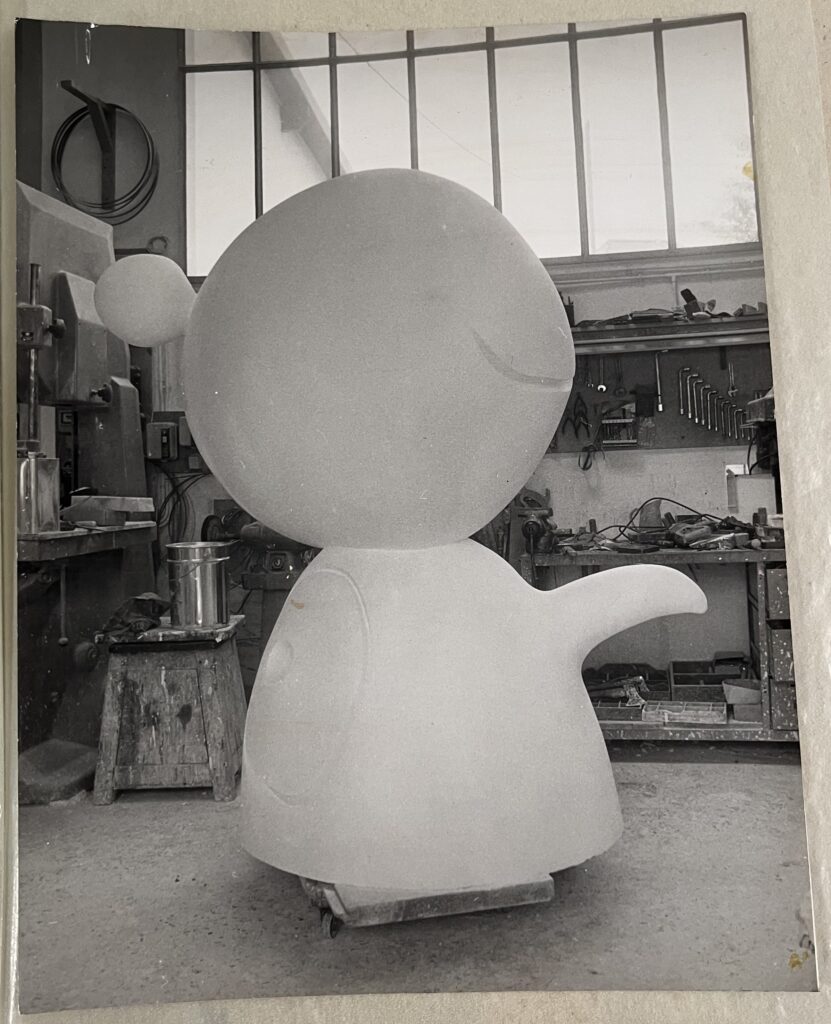
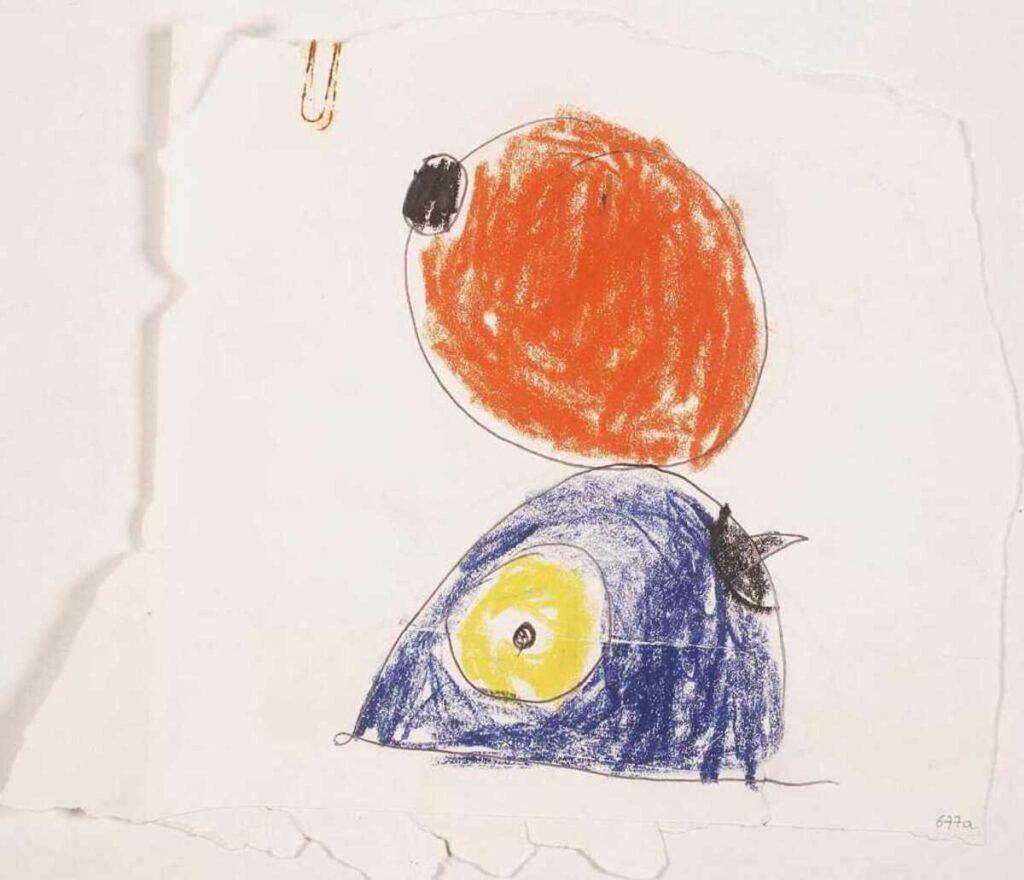
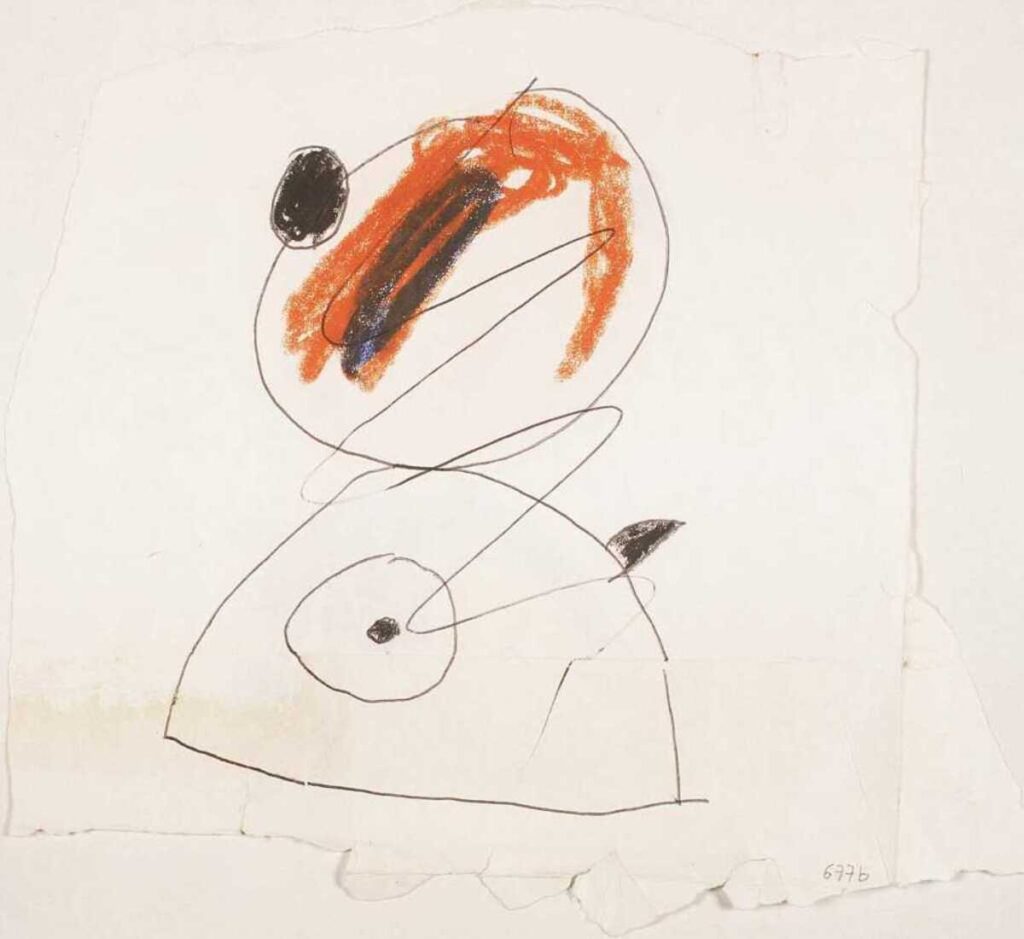
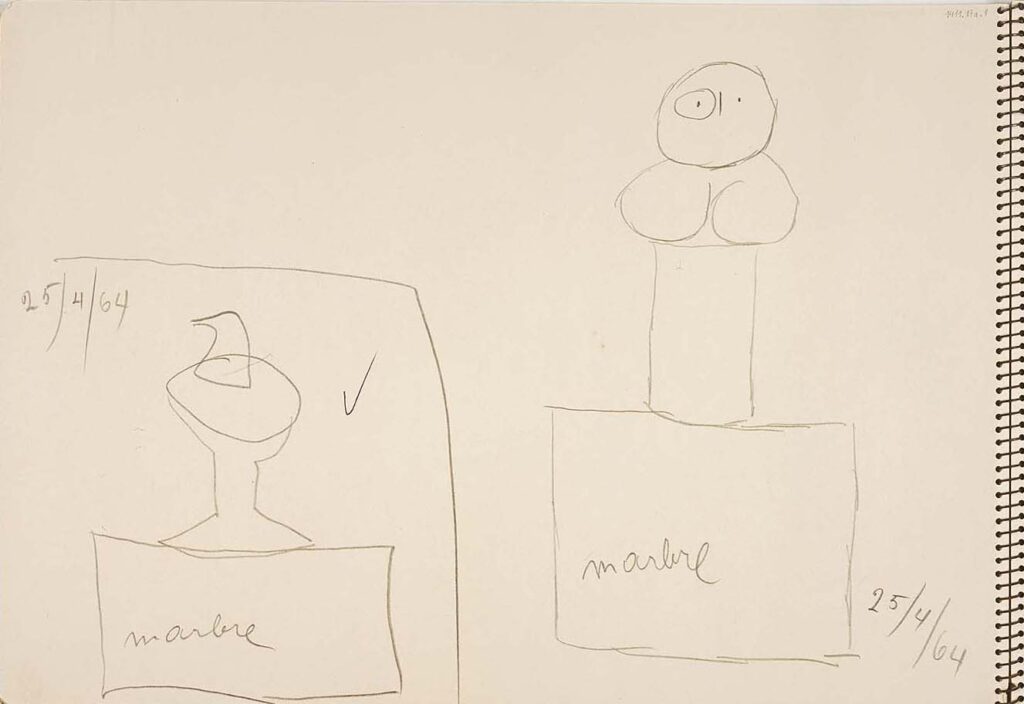
The Fundació holds two preparatory sketches for the sculpture Personnage (“Miró Sculptures” no. 312, p. 296) dating from 1974: FPJM-00677a and FPJM-00677b, and another undated one, FPJM-01334. Miró created a copy in painted synthetic resin in collaboration with Haligon, in Périgny-sur-Yerres, France. Although the colors of the final sculpture do not match those of the drawing, morphologically both figures are identical. The Fundació’s archives also hold a black and white photograph of the plaster model of Personnage , accompanied by a handwritten note by Miró indicating “marbre blanc” (FD-6816).
The Fundació Joan Miró in Barcelona holds another drawing similar to these two (FJM-3846) that could also be related to the sculpture. The inscription “Central Park?” appears in the upper right corner of this drawing, suggesting that this work may have been considered for Miró’s unfulfilled project to create a sculpture for Central Park in New York.
Femme et oiseau, 1982
Bronze
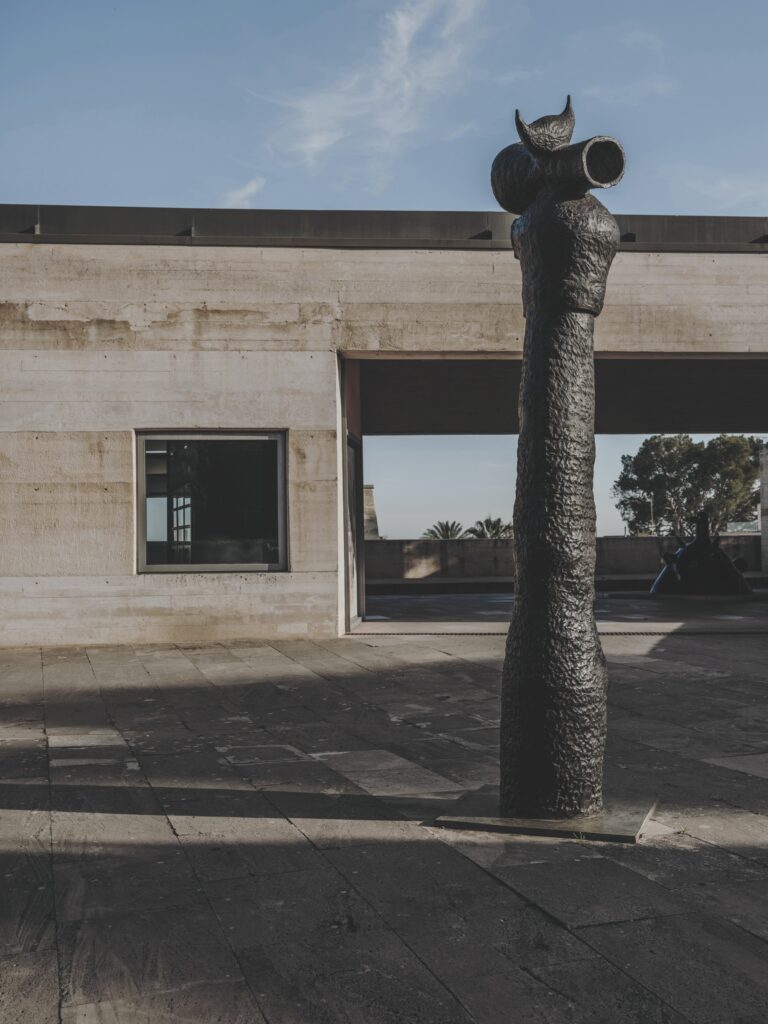
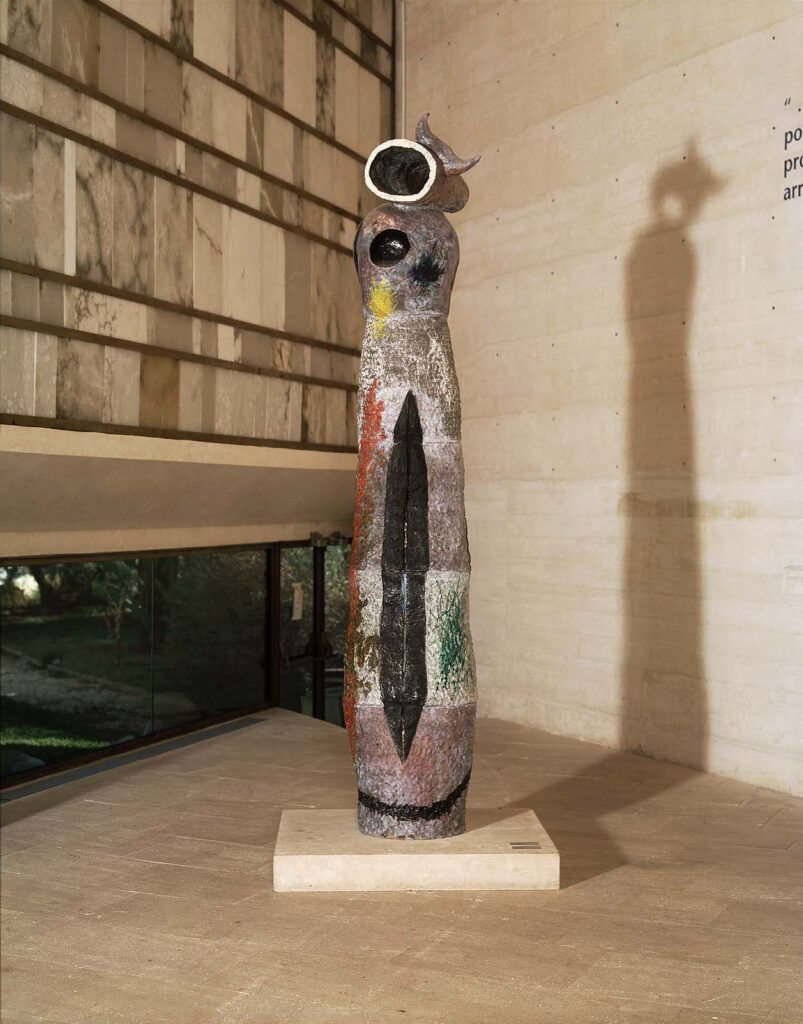
At the Fundació you can find two versions of the sculpture Femme et oiseau.
A ceramic version (“Miró Artigas Ceramics” no. 328, pp. 272-273), created by Miró in collaboration with Josep Llorens Artigas and Joan Gardy Artigas in 1962 and donated to the Fundació by the Miró family in 1993 (FPJM-00428), is on permanent display in Espai Estrella. The spirit of Park Güell is evident in this piece: a cement obelisk covered with fragments of colored ceramic in the style of trencadís, a clear homage to Antoni Gaudí. Against this backdrop is juxtaposed the unmistakable sexual symbol of woman in the vertical incision that runs along its surface. As on other occasions, the crescent-shaped silhouette of a bird crowns the figure, establishing a connection between earth and sky.
Outside the Fundació, between the Moneo Building and the Sert Studio, stands the bronze version dating from 1982 (“Miró Sculptures” nº 392, p. 361) which was placed on long-term loan in 2016. It is the last of the series of pieces made in Susse Fondeur, a foundry whose origins date back to the 19th century and with which Miró worked from 1967. The Fundació also preserves two preparatory drawings that show the working process of this sculpture (FPJM-00660 and FPJM-01058).
In 1982, Miró completed the final version of Femme et oiseau in collaboration with Joan Gardy Artigas. This was one of the artist’s last major projects for a public space: the monumental 22-meter-high ceramic sculpture Dona i ocell for the Parc de l’Escorxador in Barcelona (now Parc de Joan Miró). Although he was unable to attend the inauguration the following year due to his fragile health, Miró was able to oversee the work’s development and its placement.
Maternité, 1973
Bronze
Miró produced an edition of four numbered copies of this sculpture, in collaboration with Susse Fondeur, in 1973 (“Miró Sculptures” no. 303, p. 289). The copy on long-term loan in the Fundació is the fourth of this edition.
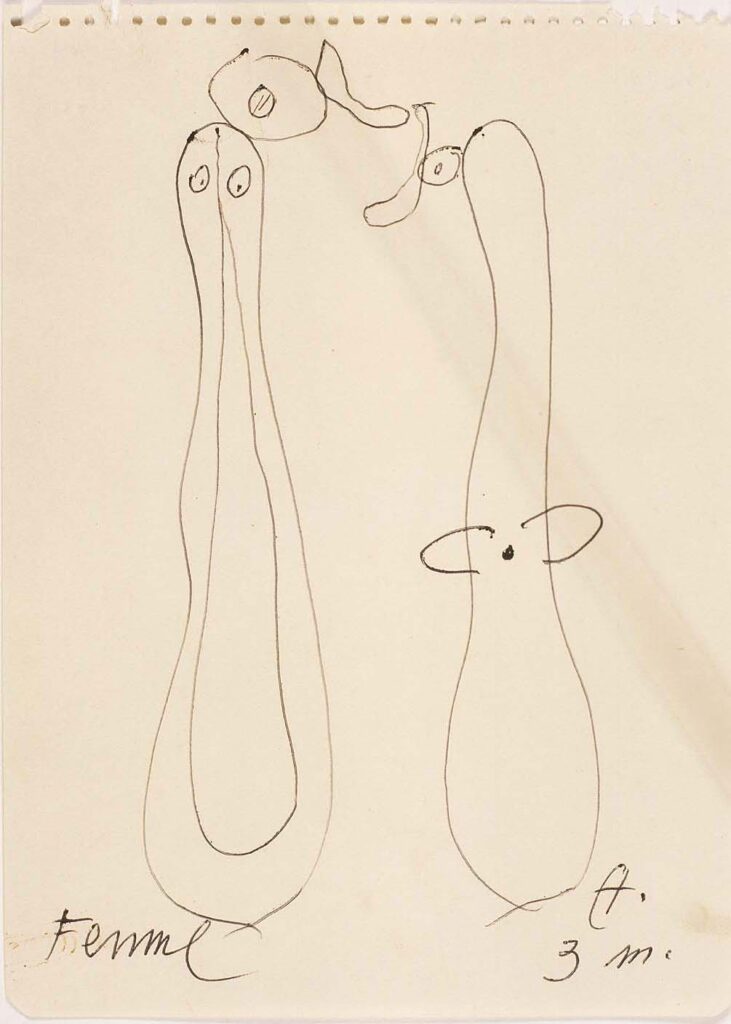
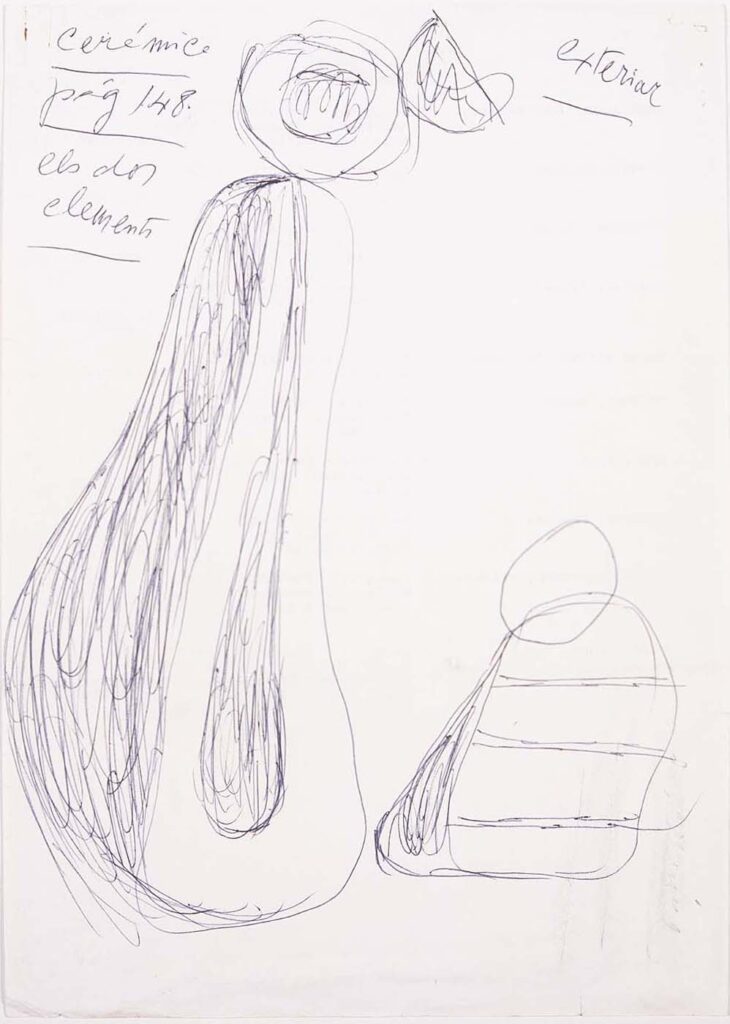
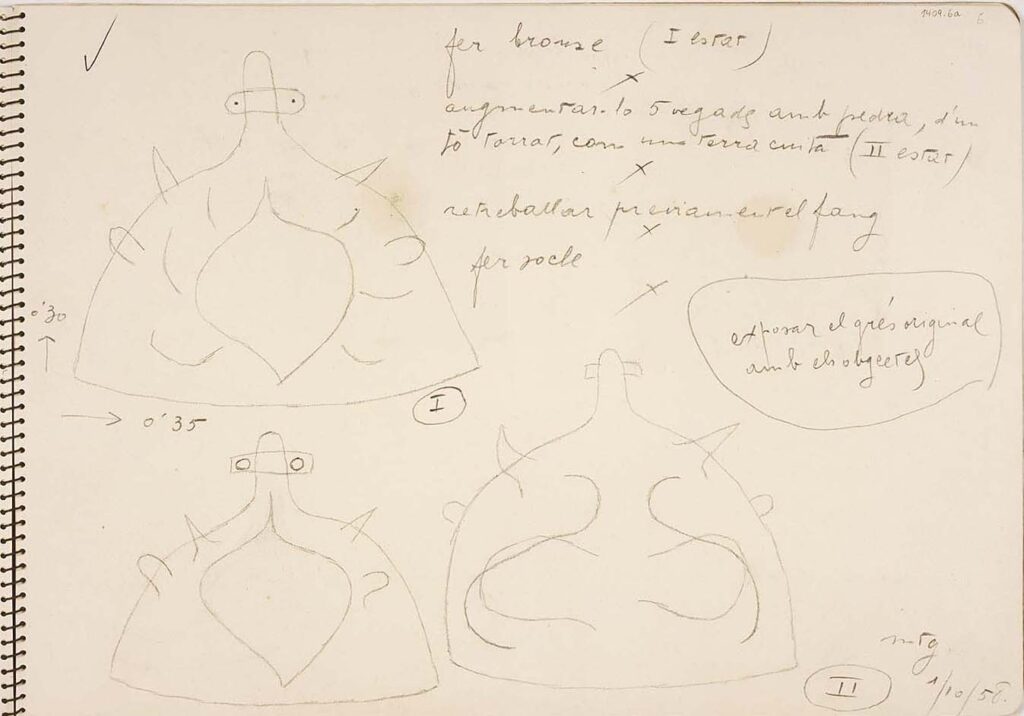
The genesis of this piece dates back to drawings made in 1946, which are currently held in the collections of the Fundació Joan Miró in Barcelona: one is dated August 21 (FJM-3782) and the other September 20, 1946 (FJM-3525). The Fundació Pilar i Joan Miró in Mallorca also holds two drawings related to this sculpture: FPJM-1409.6 and FPJM-1249. The first is dated October 1, 1958, and the second August 7, 1964. Miró reproduced this sculpture in one of the charcoal graffiti on the walls of a room in his studio in Son Boter.
Morphologically, Maternité is related to Femme, a small-format bronze sculpture (28 x 32 x 26 cm), of which Miró made an edition of six numbered copies in 1967 (“Miró Sculptures” no. 97, p. 107) and which in turn has its precedent in two ceramics entitled Femme from 1945 and 1956 (“Miró Artigas Ceramics” no. 25, p. 42 and no. 103, p. 104).
Miró returns time and again to the same references, recovers images from the past and reinterprets his own vocabulary of signs, immersed in a process of constant revision and discovery.
Statue, 1975
Bronze
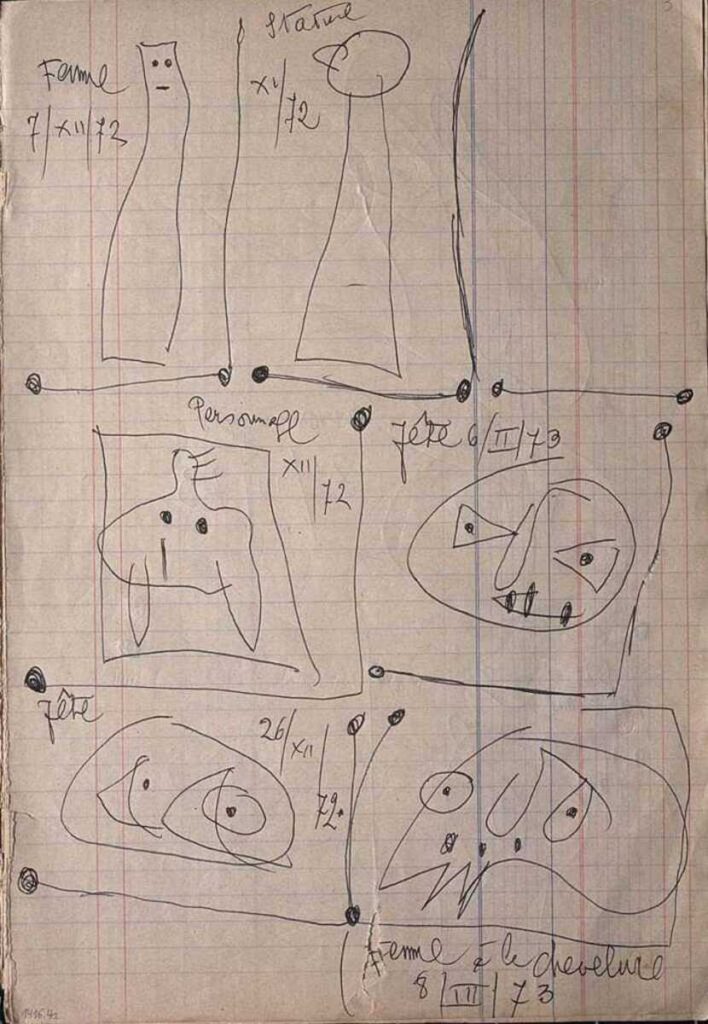
Statue is an example of a bronze sculpture that began as a ceramic piece, a pattern repeated some thirty times in his sculptural production. In 1956, Miró used three similar versions of the ceramic pieces titled Figurine I, Figurine II and Figurine III (“Miró Artigas Ceramics” nos. 79-80-81, pp. 88-89) as the starting point for the bronze sculpture Statue, created in 1975 (“Miró Sculptures” no. 336, p. 318). Ceramics is a technique that produces unique and fragile pieces. In contrast, bronze sculpture allows for the production of multiple copies, characterized by their permanence and monumental nature.
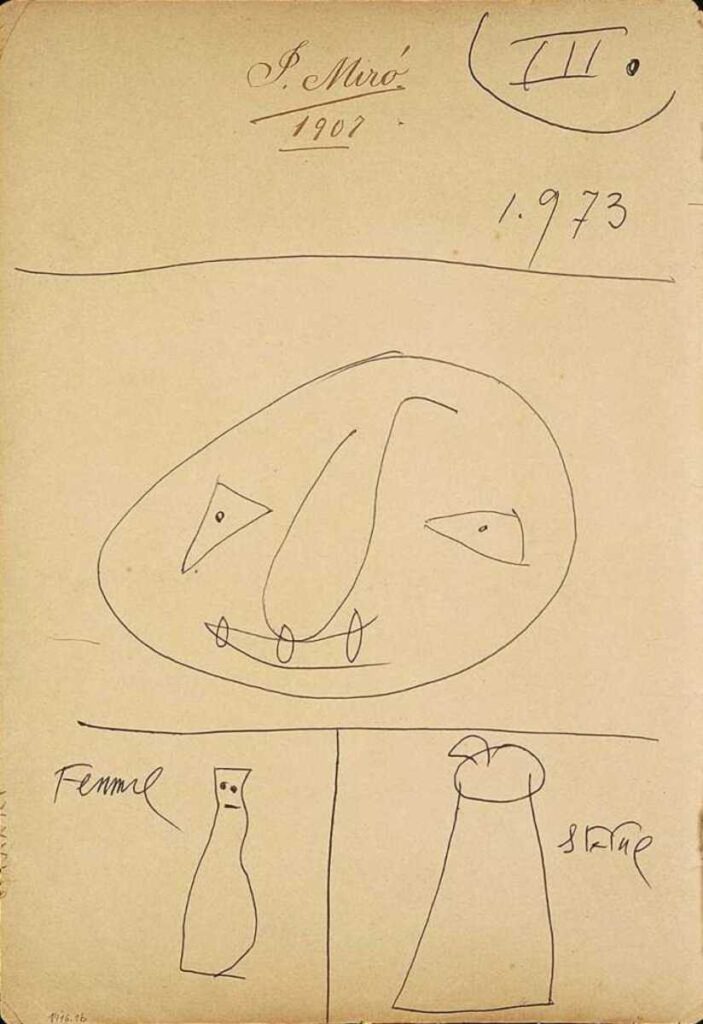
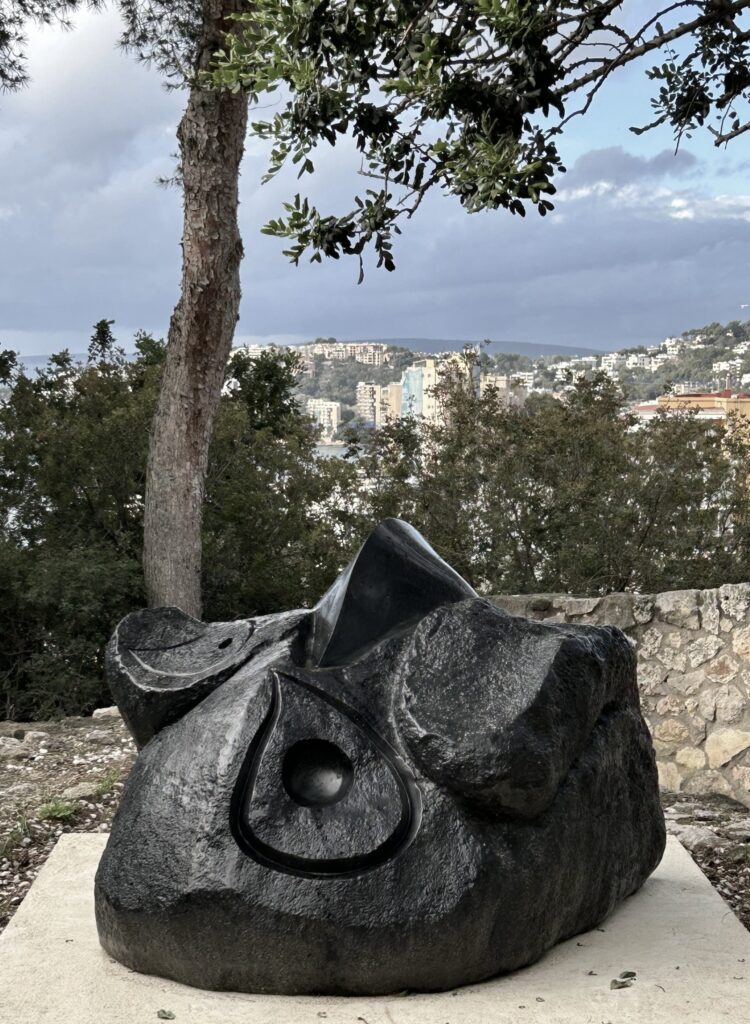
Tête, 1974
Bronze
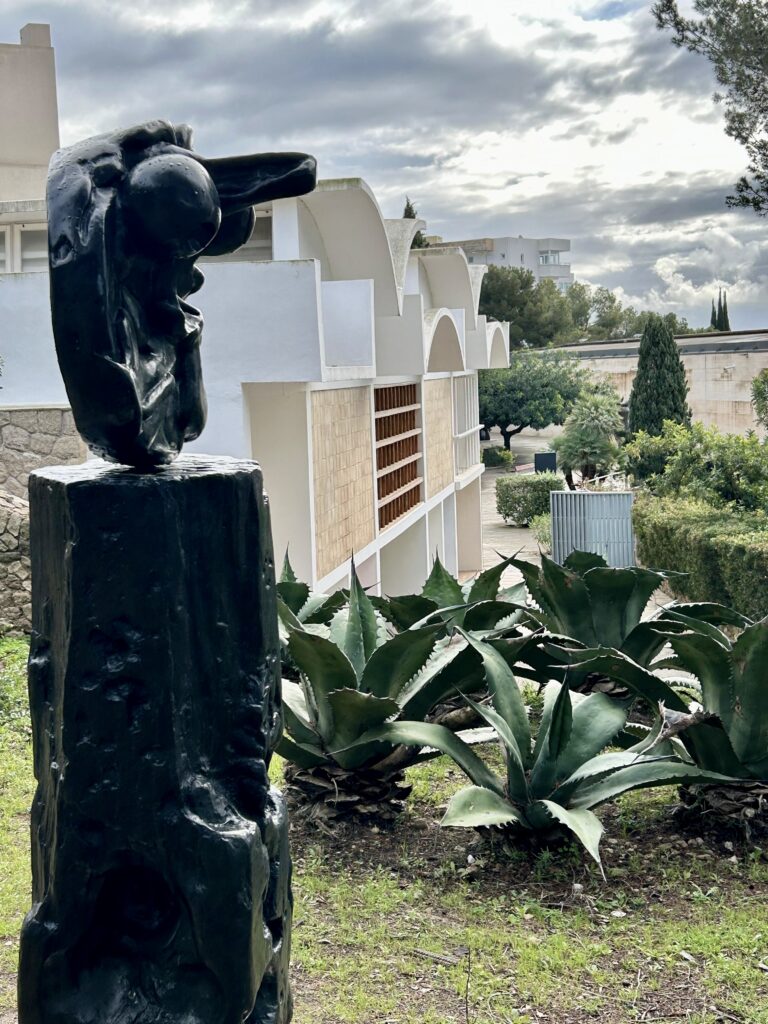
The bronze sculpture Tête from 1974 (“Miró Sculptures” no. 311, p. 295) is based on an object linked to ceramic production: a pyrometric cone used to measure the temperature in the kiln, which here completes the figure’s face as a nose. This was a common element in his work with Artigas, who called it a “montra” (from the French montre, or wristwatch) because it marks the firing times. Therefore, Miró incorporates an instrument from the process itself into the final work, magnifying and dignifying it, immortalizing it with the bronze casting technique.
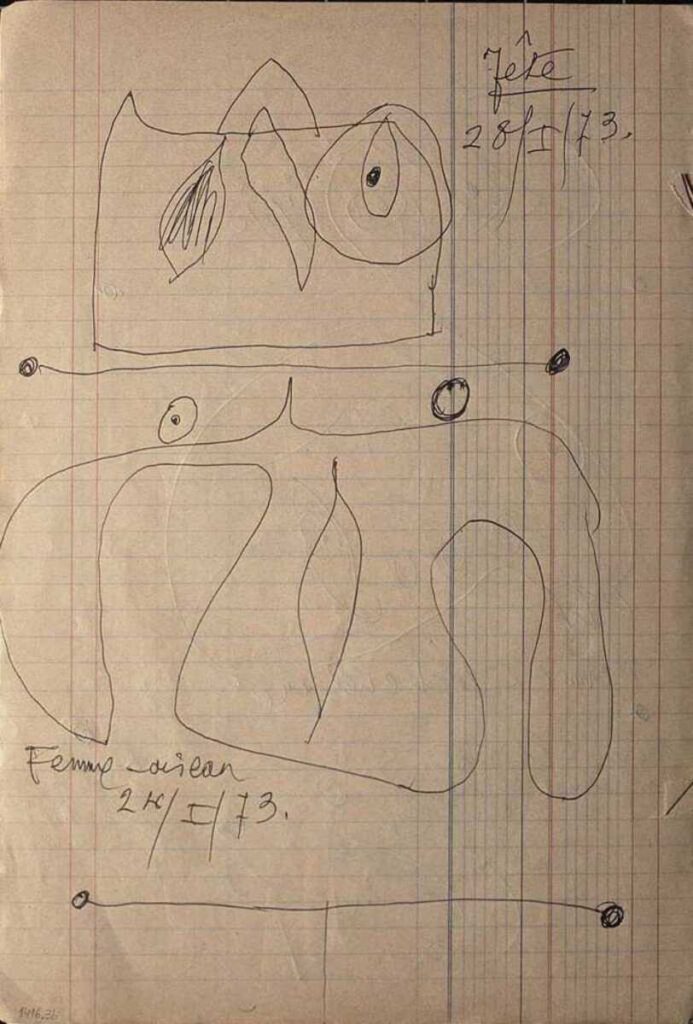
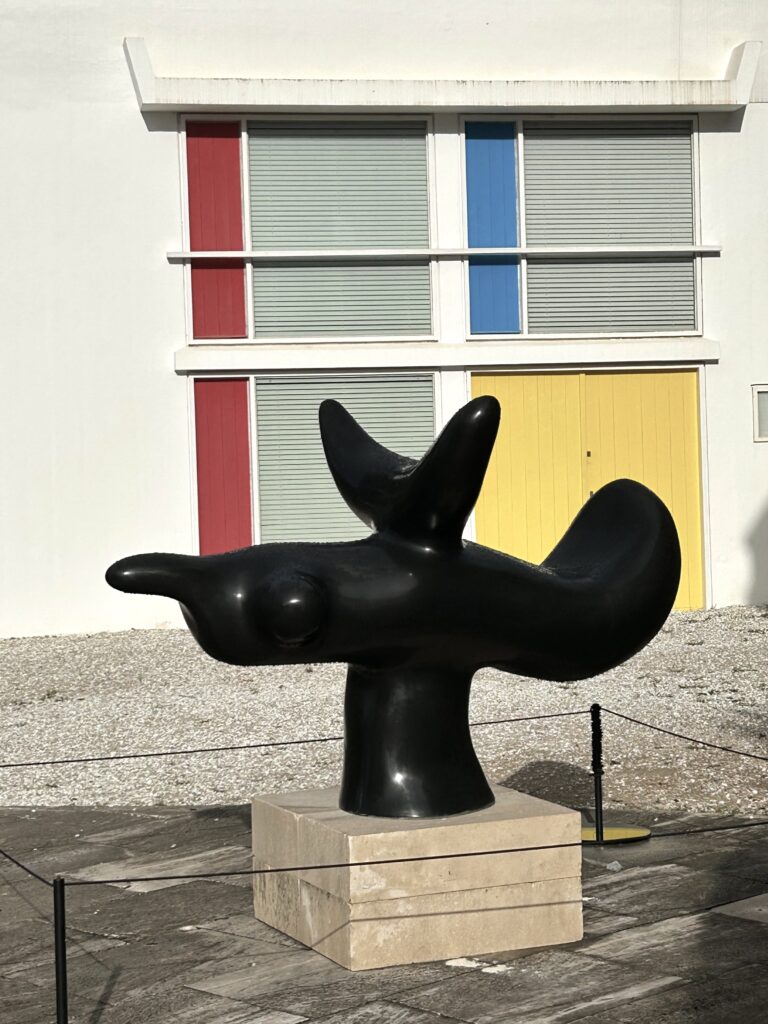
Oiseau solaire, 1966
Bronze
The figure of the bird, and specifically this Oiseau solaire, is a recurring image in the sculptural production of Joan Miró.
The artist created several versions, in different materials and sizes and for different settings, starting with the bronze edition of eight small-format copies from the Gimeno Foundry in 1946 (“Miró Sculptures” no. 29, p. 47). This bird figure reappears repeatedly as part of the ceramic compositions he created with Artigas in 1956. According to William Jeffett, Miró called the first versions of this sculpture simply “Oiseau” and it was later that it came to be called “Oiseau solaire”.
The figure increases in size in the edition of five monumental-sized copies made by Susse Fondeur in 1966 (“Miró Sculptures” nº 67, p. 80), to which the copy on long-term loan at the Fundació belongs, until the definitive version of 1968 in white Carrara marble (“Miró Sculptures” nº 64, p. 77) which together with Oiseau lunaire presides over the Labyrinthe of the Fondation Maeght in Saint-Paul de Vence.
The Fundació’s museum collection includes the preparatory drawing FPJM-01409.2b, found in a notebook dedicated to sculpture, as well as a charcoal graffiti in one of the ground-floor rooms of his Son Boter studio and the plaster cast of one of the small-scale versions (FPJM-TB-0004). Miró also made a sketch on the floor of his Mont-roig studio, as documented in photographs taken by Joaquim Gomis in 1958-1959.
Once again, Miró recovers his own work and reinterprets images from the past, evolving from the first examples that fit in the palm of a hand to reach the monumental scale.
Femme, 1981
Bronze
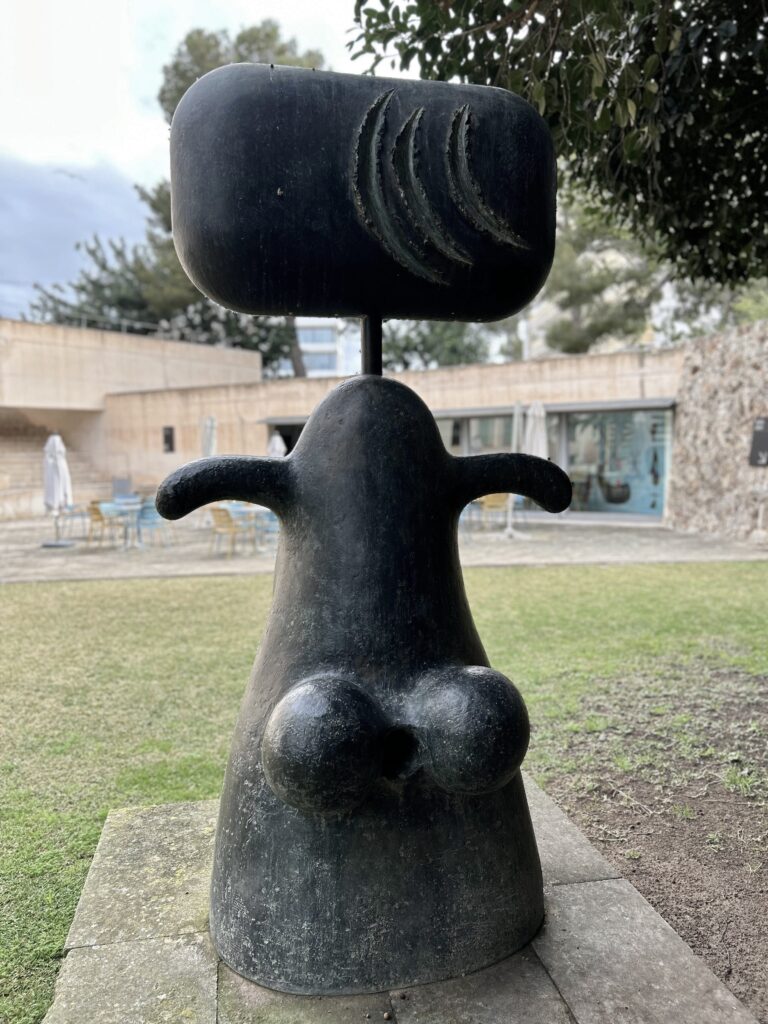
The sculpture Femme from 1981 (“Miró Sculptures” nº 386, p. 357) was cast in July 1996 at the Parellada Foundry in Lliçà d’Amunt, Barcelona, as stated in a letter from Parellada to the Fundació dated January 10, 1997. The piece was able to be reissued thanks to funding from the Ministry of Education and Culture in 1995 and the transfer of copyright from the artist’s heirs.
A second nominal edition of this sculpture, analogous to that of the Fundació Pilar i Joan Miró, is part of the collection of the Barcelona City Council and is located in the lobby of the Casa de la Ciutat after being donated by Miró in 1983. Both the Fundació Joan Miró in Barcelona and the Reina Sofía Museum hold copies of a sculpture also entitled Femme made in 1981 (“Miró Sculptures” nº 385, p. 356), of very similar morphology, but of smaller dimensions.
Personnage gothique, oiseau éclair, 1976
Bronze
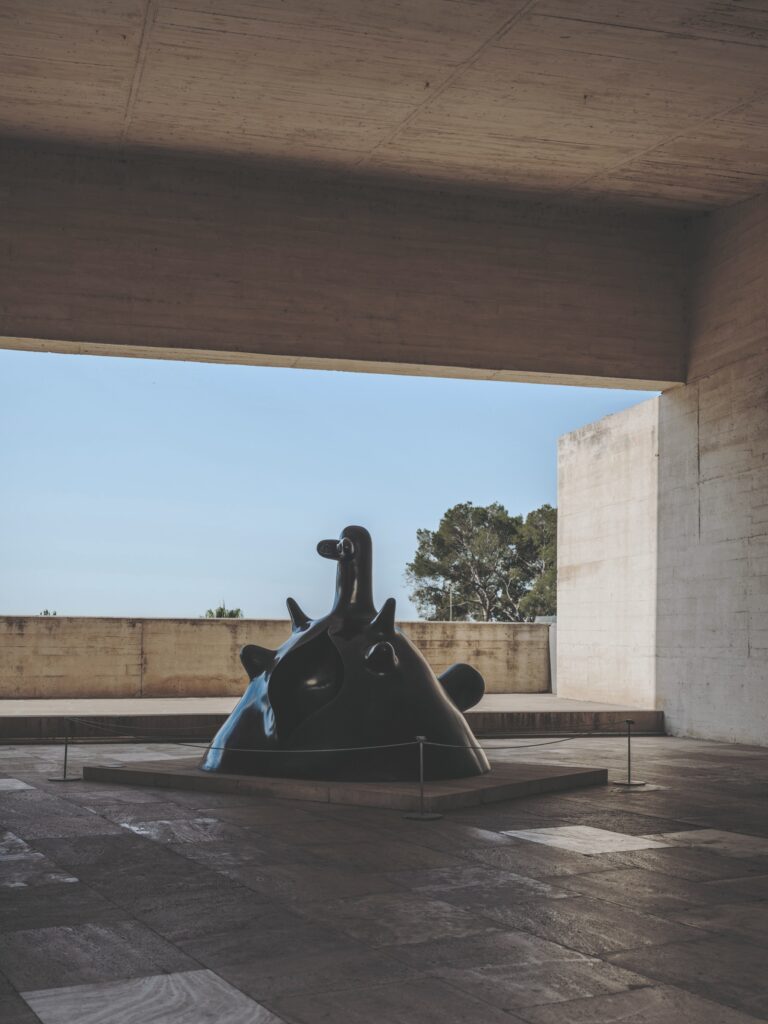
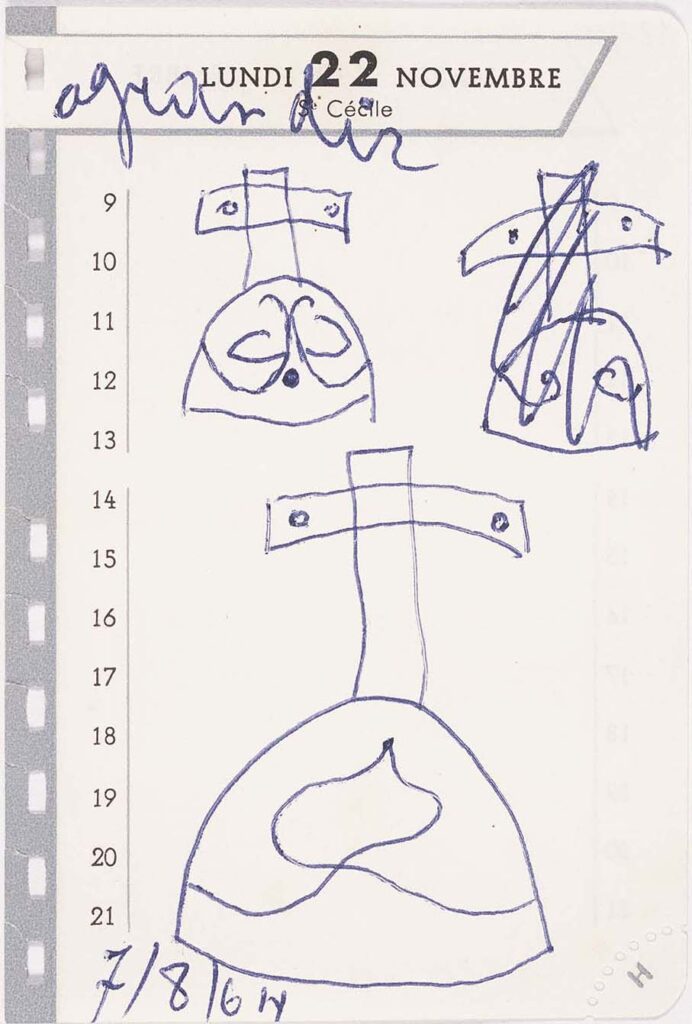
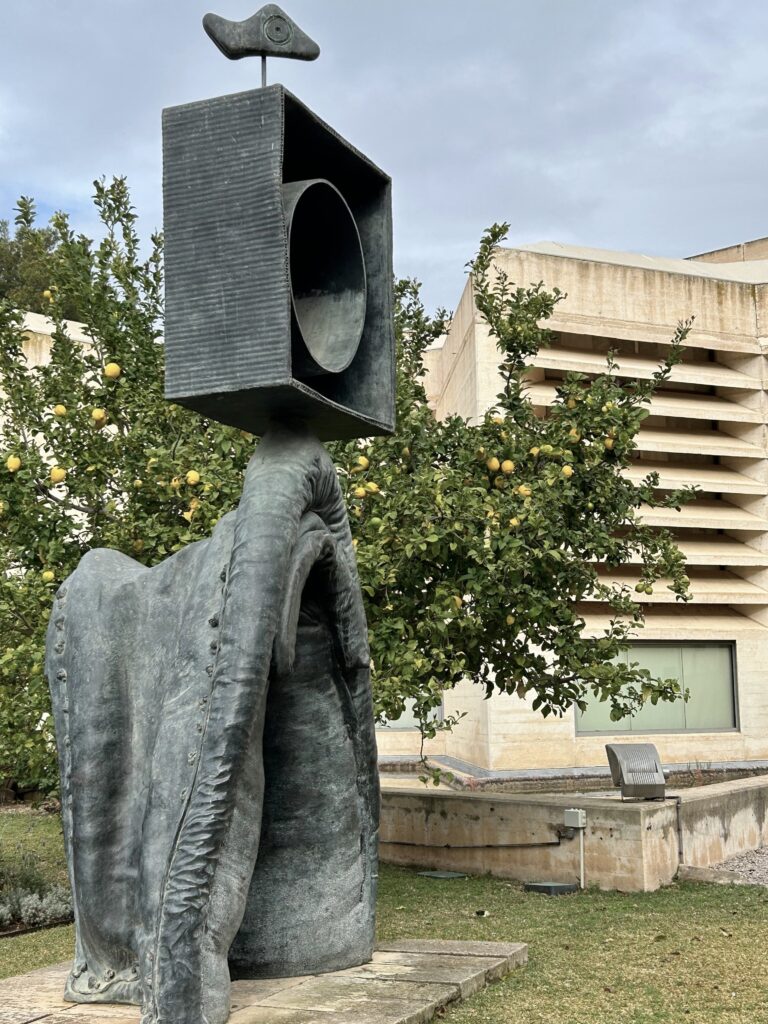
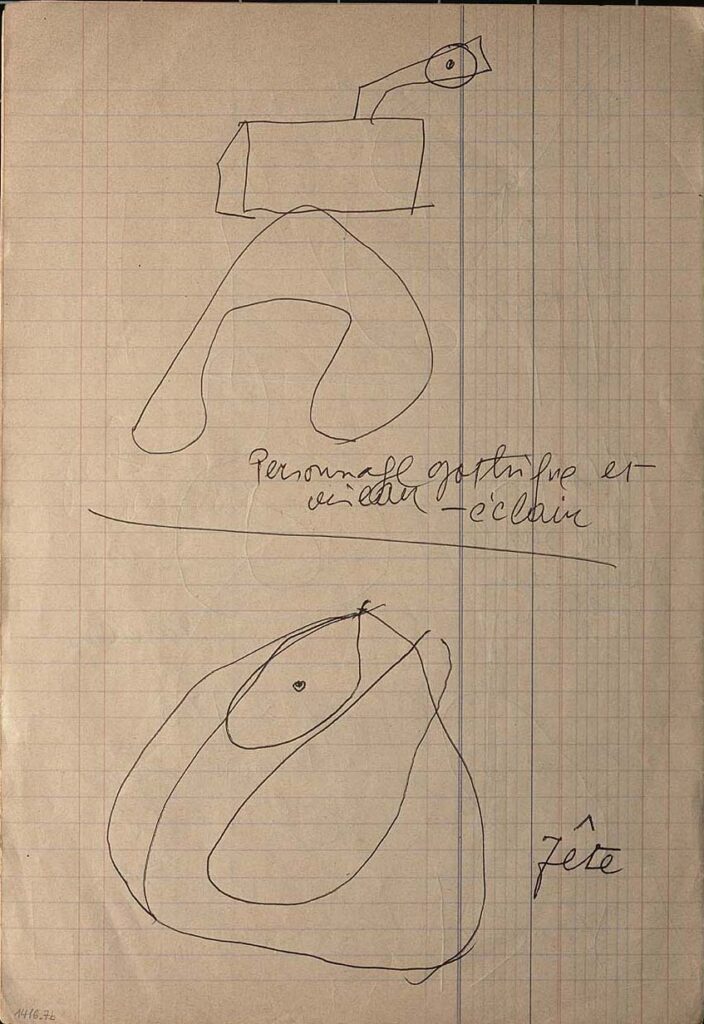
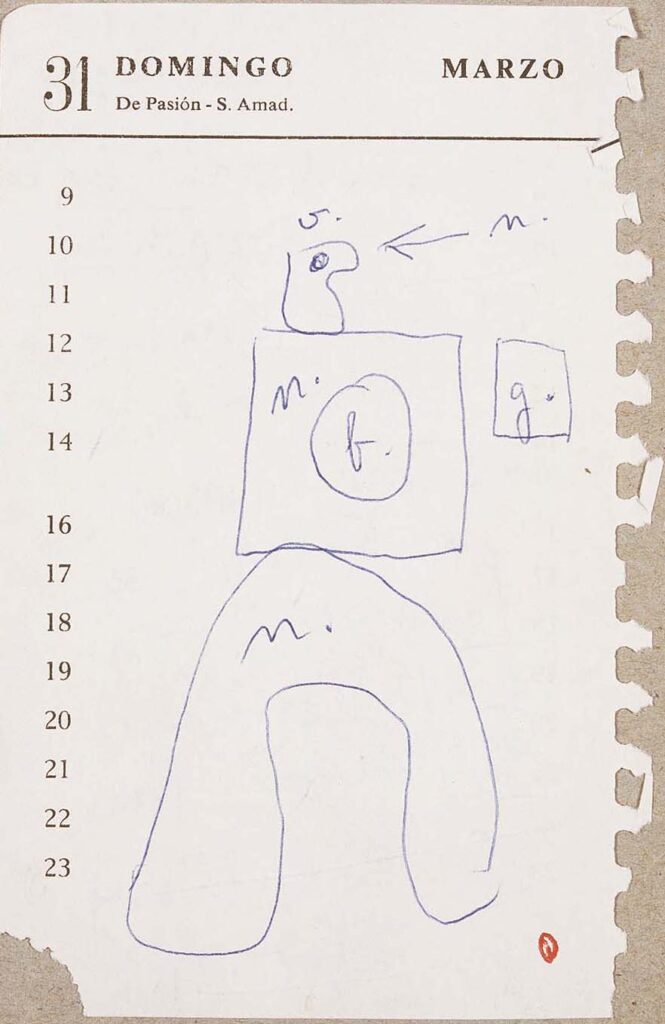
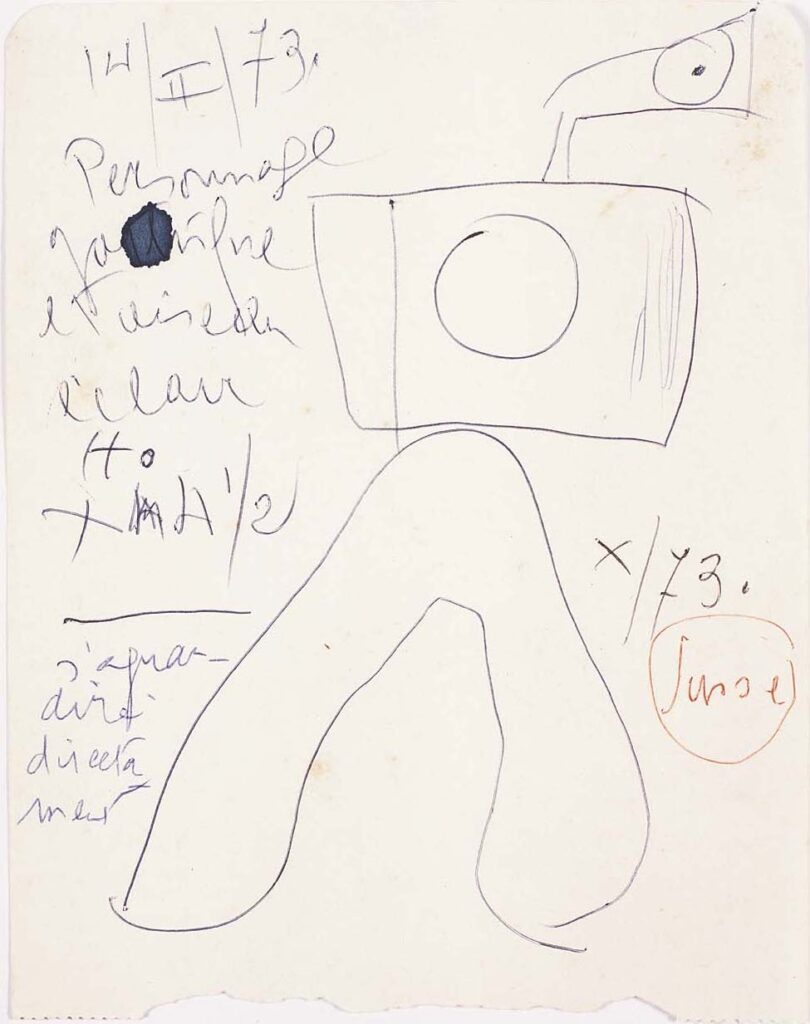
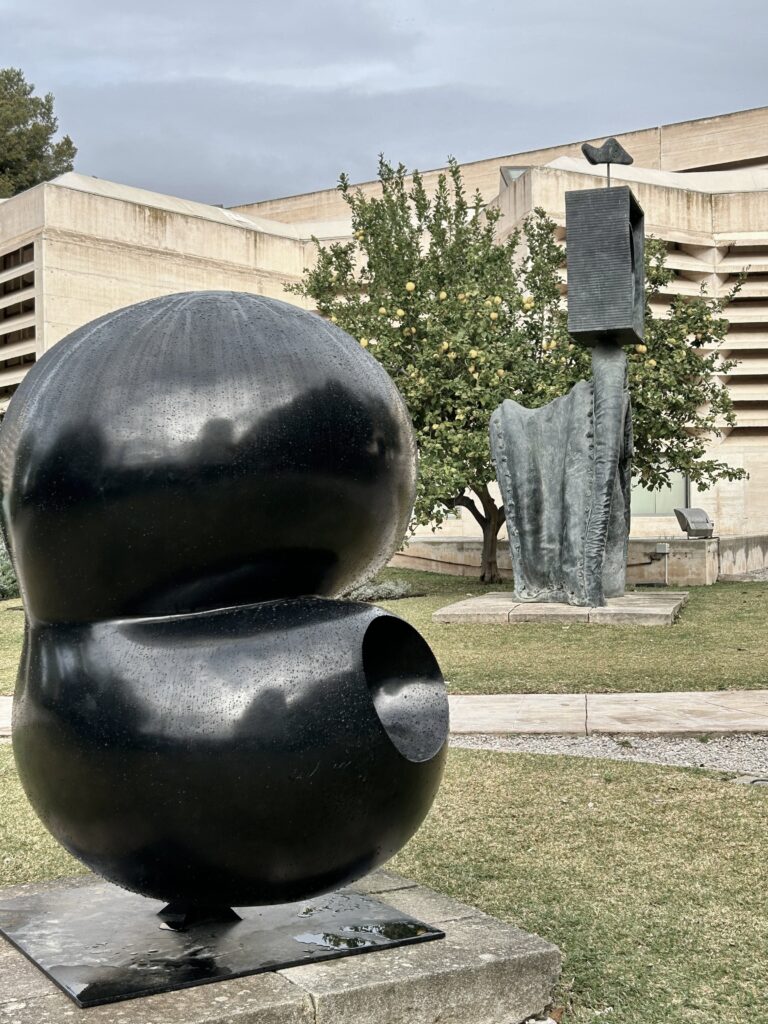
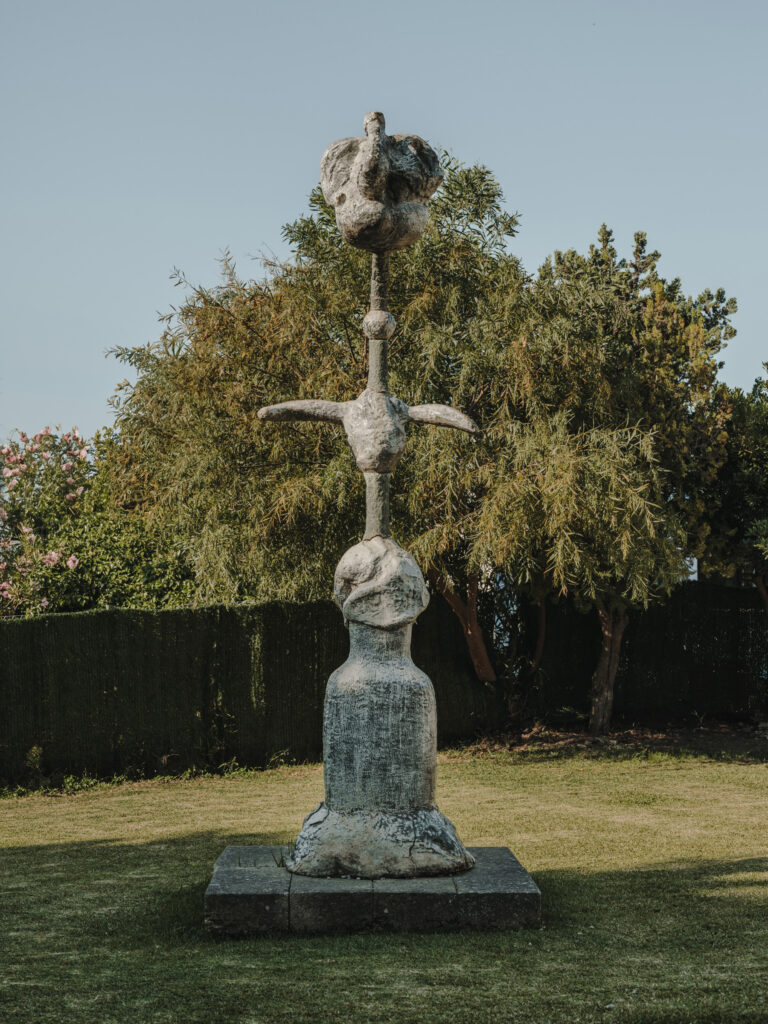
In 1976 Joan Miró created the imposing sculpture Personnage gothique, oiseau éclair (“Miró Sculptures” nº 339, pp. 320-321) from the assembly of a hat box and the “cushion” of a yoke, magnified to make the head and body, respectively, and crowned by the figure of a bird.
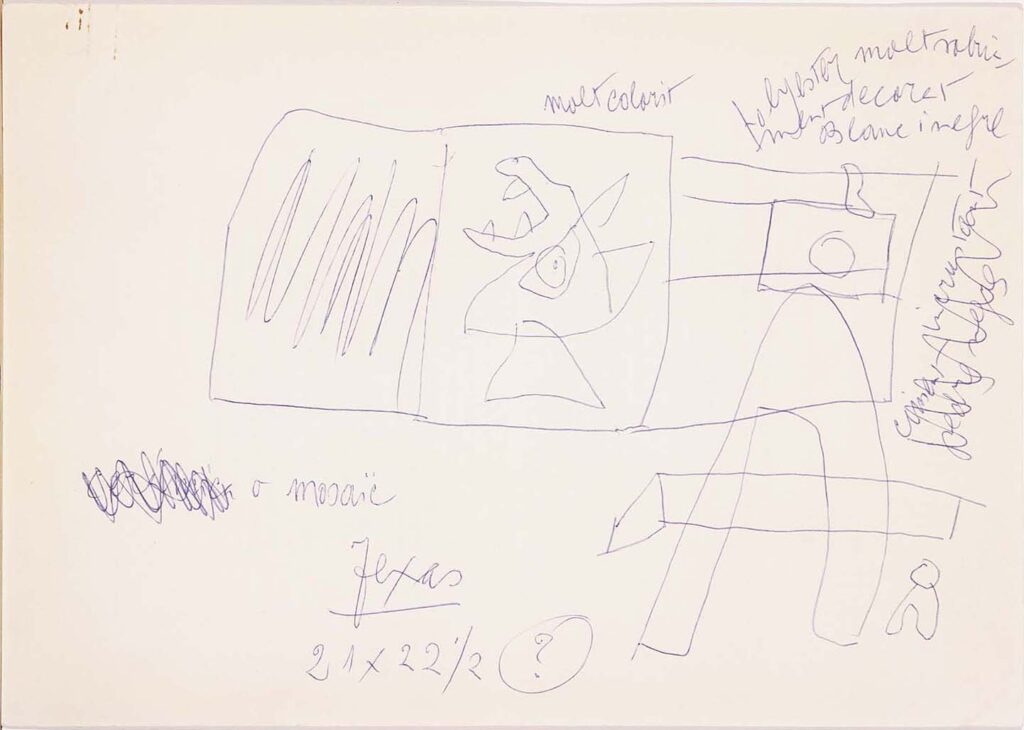
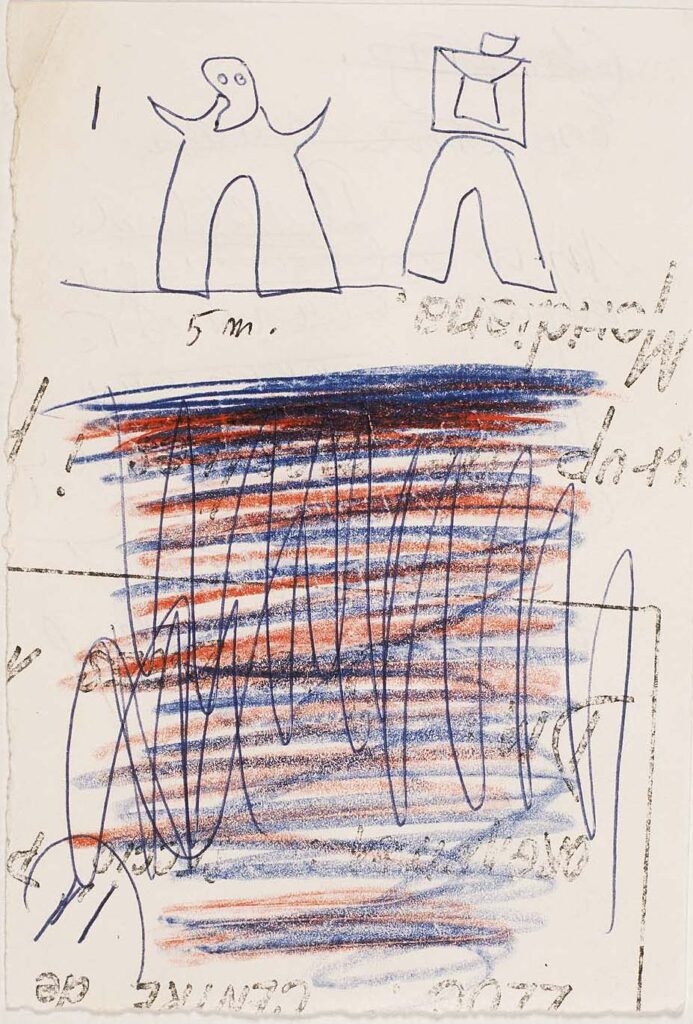
The Fundació Pilar i Joan Miró in Mallorca holds five drawings related to this sculpture: FPJM-00697, FPJM-00700, FPJM-00850, FPJM-00979, and FPJM-01416.07b. Drawing FPJM-00697 features a series of colored initials that seem to indicate that, at some point, Miró considered painting it. This appears to be confirmed by a drawing in the Fundació Joan Miró in Barcelona (FJM-3908), in which the sculpture is painted red, blue, black, yellow, and green. Furthermore, drawing FPJM-00979, dated October 1973, already includes the title “Personnage gothique, oiseau éclair” and the annotation “it will be directly enlarged.”
Initially, Susse Fondeur produced an edition of two numbered copies in 1976. The sculpture for the Fundació Pilar i Joan Miró is of a later date and was carried out at the Foneria Parellada in Lliçà d’Amunt in Barcelona in 1997, thanks to funding from the Ministry of Education and Culture in 1995 and the transfer of copyright from the artist’s heirs.
Torse, 1969
Bronze (lost wax casting)
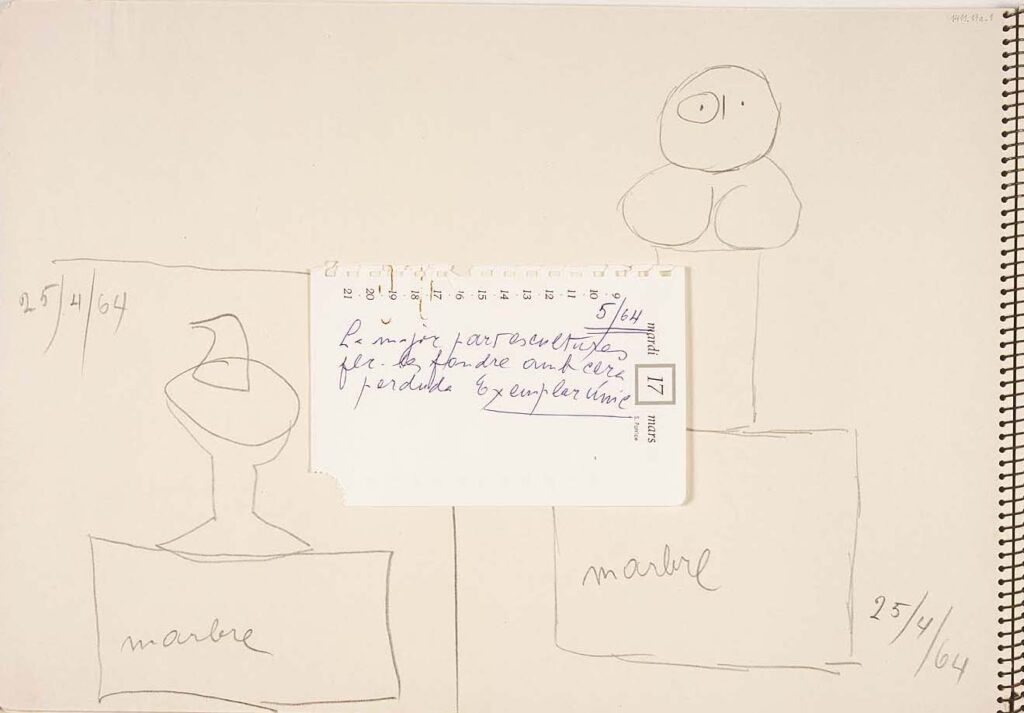
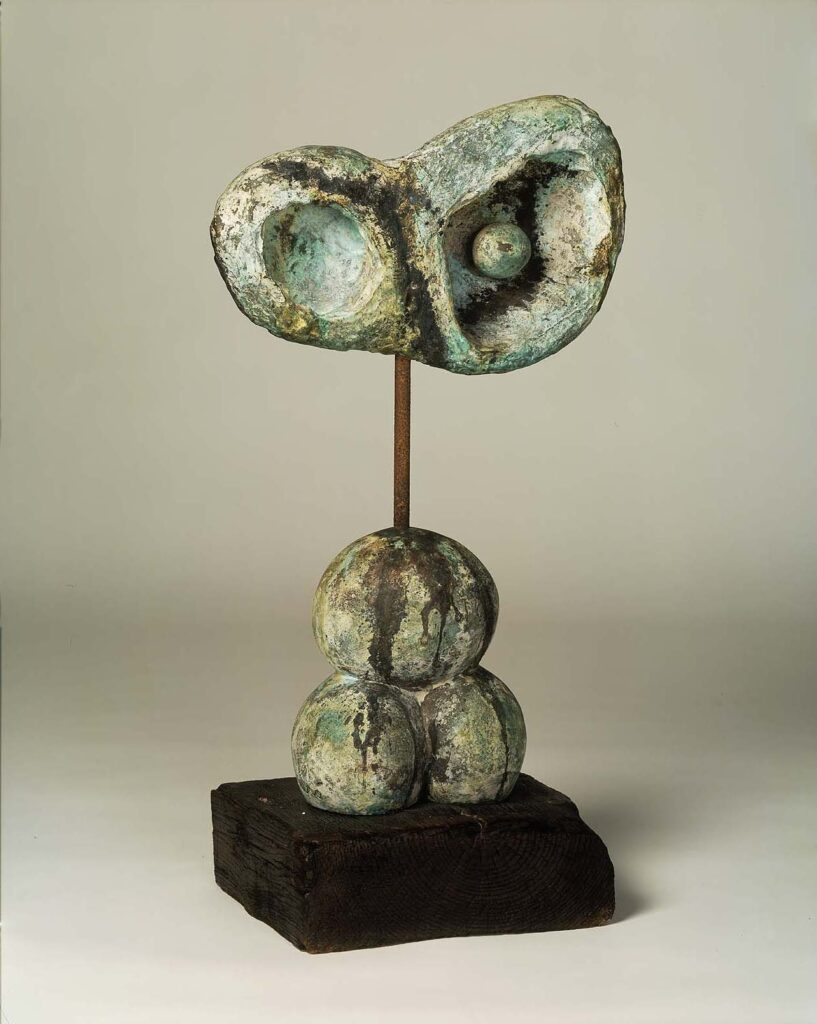
Like many of Joan Miró’s monumental sculptures, the work Torse (“Miró Sculptures” no. 137, p. 146) is inspired by nature and deeply rooted in the landscape and the Mediterranean environment of the artist. Its origin lies in a small, unusually shaped tomato whose peculiarity powerfully attracted Miró. The moment of discovery and the choice of this natural object as a starting point was captured by photographer Ernst Scheidegger in a series of photographs taken at Mas Miró in Mont-roig and the surrounding area.
Joan Miró experimented with this element in various sculptures until reaching the monumental format in 1969. He used it as the body of the ceramic piece Figurine in 1956 (“Miró Artigas Ceramics” no. 75, p. 86) and in its later bronze version Torse de Femme in 1966 (“Miró Sculptures” no. 75, p. 88) as well as Femme et oiseau (“Miró Sculptures” no. 124, p. 136) and Femme (“Miró Sculptures” no. 125, p. 137) from 1968. A reduced version of barely ten centimeters in height entitled Torse de Femme, dating from 1966 (“Miró Sculptures” no. 76, pp. 88-89), is preserved at the Fundació Joan Miró in Barcelona.
The exploration of this form and its progression towards a large scale has been captured in one of the graffiti that Miró drew on the wall of the staircase that goes up to the first floor of Son Boter.
Figure, 1992
Ceramic and bronze
This sculpture was created by Joan Gardy Artigas in 1992 (“Miró Artigas Ceramics” no. 423, pp. 348-349). Gardy Artigas was inspired by a ceramic piece entitled Figurine (Projet pour un monument), created by Joan Miró and Josep Llorens Artigas in 1956 (“Miró Artigas Ceramics” no. 68, p. 81). The original ceramic and iron figure measured only 45 x 11 cm. The fact that Miró subtitled this work “Projet pour un monument” could indicate his intention to later enlarge it and transform it into a monumental sculpture.
Throughout 1956, Miró created several ceramic figurines entitled “Figurine”. Both in the aforementioned catalogue raisonné “Miró Artigas Ceramics” and in the publication by José Pierre and José Corredor-Matheos “Céramiques de Miró et Artigas” (Maeght Éditeur, Paris 1974, pp. 204-207) there appear 21 pieces with this same title and with the same year of production.
Three ceramic pieces from this 1956 series entitled Figurine I, Figurine II and Figurine III (“Miró Artigas Ceramics” nº 79-80-81, pp. 88-89) would be used by Miró himself as a starting point for the sculpture Statue made in bronze in 1975 (“Miró Sculptures” nº 336, p. 318), which is also located in the gardens of the Fundació.
Tête, 1974
Bronze (lost wax casting)
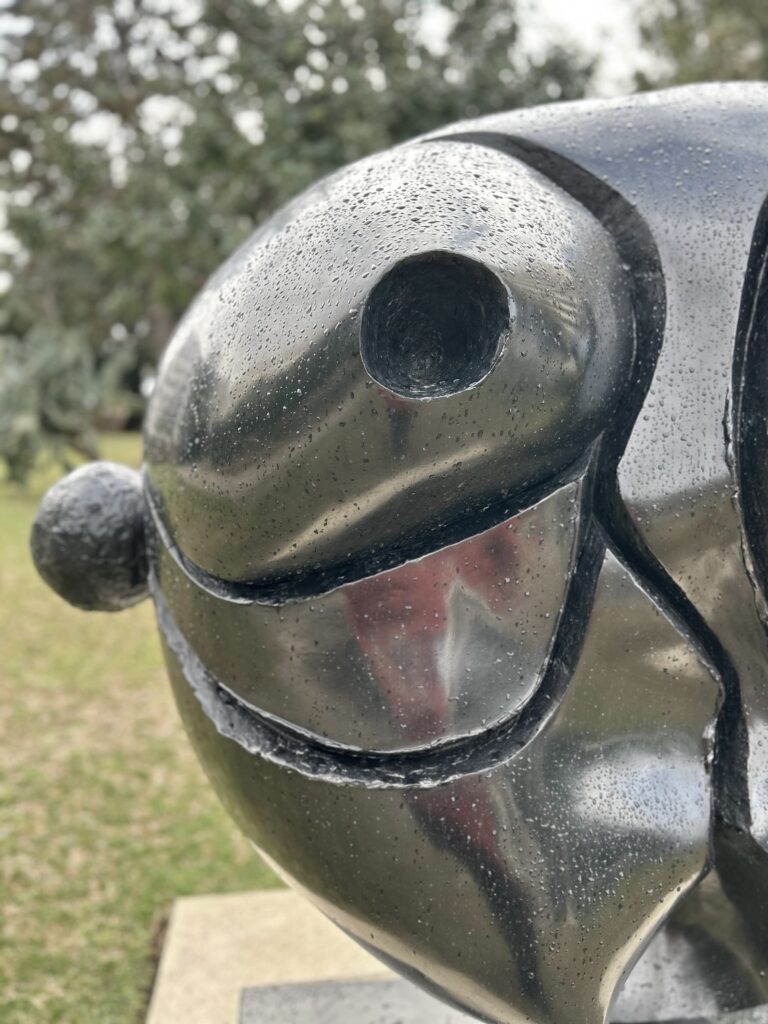
The starting point for the 1974 sculpture Tête (“Miró Sculptures” no. 321, p. 303) is a “galeta d’oli” or Inca biscuit, typical of Mallorca. The original is still preserved, from which a plaster model was made and which was enlarged with the help of a pantograph until it reached the monumental size that the artist sought for his work.
The theme of the “oil biscuit” reappears in various preparatory drawings by Miró that are preserved in our archival holdings and even in one of the graffiti in Son Boter, until it materializes in the bronze sculpture Constellation of 1971 (“Miró Sculptures” nº 221, p. 218), on long-term loan at the Fundació, whose reverse reveals the section of the biscuit.
Once again, an ordinary object, initially ephemeral and disposable, is immortalized through the technique of bronze casting, a material linked to permanence and monumentality.